Showing posts with label Etienne Domingue. Show all posts

Your 2016 Sexy Costume Options

You can do better, fellow intellectuals. Read on.

It’s Halloween. If you’re the personable type, odds are you have been invited to a costumed event. You may already have plans, but does your costume show off your smarts while living up to the time-honored tradition of unnecessary sexualization? We didn’t think so.

Here are three suggestions to replace your subpar costume with something that's both culturally-edifying and sexually-objectifying. You’re welcome.

Sexy Ursula K. LeGuin
Ursula K. LeGuin is an American science-fiction and fantasy writer who greatly influenced both genres with books like The Left Hand of Darkness, The Dispossessed, The Lathe of Heaven, and an entire series of Earthsea novels and short stories. Her writing brilliantly depicts alternate worlds, each with their own masterfully-constructed gender and sexual politics, economies, environments, religions, and ethnographies.

To dress up as Sexy Ursula K. LeGuin you need to:

  • dye your hair gray;
  • wear casual clothes;
  • write influential fiction and literary essays;
  • have terrible luck at Earthsea adaptations. (Dominik)

Sexy Michel Foucault
Michel Foucault was a French philosopher, social theorist, and overall badass intellectual who wrote extensively on power, knowledge, and knowledge-power.

To dress up as Sexy Michel Foucault (who is the same as regular Foucault), follow these simple steps:

  • shave your head; 
  • put on a pair of thin-framed glasses, a white turtleneck shirt, and a suit;
  • memorize at least five of Foucault’s most abstract, intellectual, and perspective-shifting quotes; 
  • practice his gestures. Especially the balls-grabbing one. 

The last two steps are most essential. Think of this less as a costume, and more as a character study in how to turn yourself into a sexy subject. (Tova)

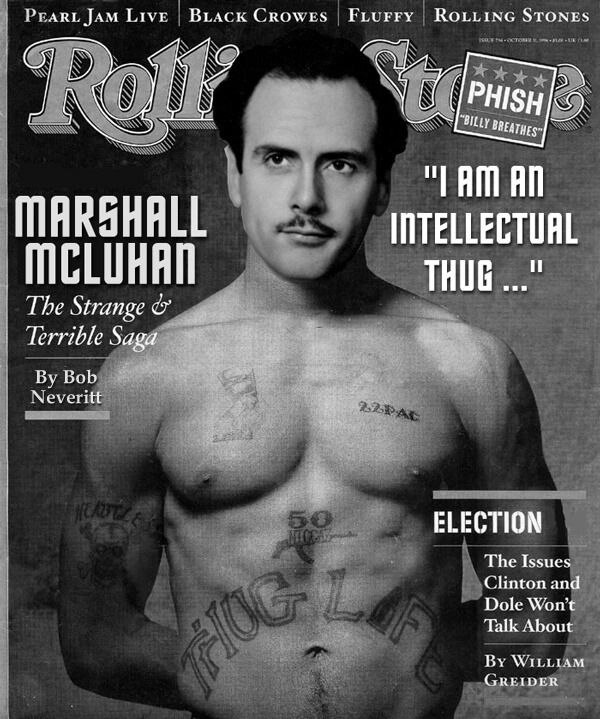
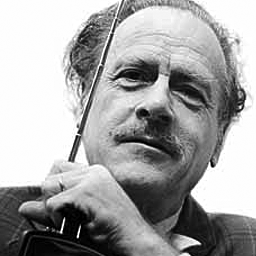
Hunky Marshall McLuhan
Herbert Marshall McLuhan was a Canadian public intellectual who defied disciplinary parochialism to expound a complex hermeneutic of media influence.

To go out as Hunky Marshall McLuhan, simply do the following:
  • grow a mustache;
  • comb your hair back with pomade, but not all of your hair. Leave room for some chaos;
  • don a woolen suit, white shirt and striped tie. For sexier results, cut off your sleeves to show off those thuggish guns of yours;
  • speak in dense aphorisms. For instance, you might say that "we shape our tools, and then our tools shape us"—or you might not. The important thing is to be misinterpreted for decades. If someone calls you a “technological determinist,” you’re in the right ballpark;
  • team up with your friends and go out as the Toronto School: have them dress up as Handsome Harold Innis, or Foppish Northrop Frye. (Etienne)

Dominik Zine is a nerdy lad from northeastern Poland and is generally found in a comfy chair with a book in hand.

Tova Crossler Ernström is a bisexual Swede, feminist, socialist, INFJ, Hufflepuff, HSP and Taurus. She is fond of personality tests, labels and lists.

Etienne Domingue is not currently on fire. Ask again later.

Luke Cage Roundtable Review – S01E02 – 'Code of the Streets'


Luke starts the second episode standing outside the Crispus Attucks Complex, a housing development which only exists in Marvel’s fictionalized Harlem. Crispus Attucks is a real figure in history however, and a Crispus Attucks playground exists in Brooklyn. Marvel makes an effort to keep their world close to our own, in consistently subtle and meaningful ways. The story of Crispus Attucks is one very relevant to Luke’s story, but we’ll come back to this.

The first episode was jam-packed with interesting references and well-researched character notes, and this continues in E02 “Code of the Streets,” starting with an extensive reading list, moving on to musical performance by Faith Evans (singer, songwriter, producer, author, and widow to Biggie Smalls, Cornell’s idol), and ultimately ending with Crispus Attucks. But first—

Luke Cage – S01E02 – Code of the Streets
Luke is pulled deeper into the fight for his neighborhood when, as a favor to an old friend, he tries to help a kid who's in trouble with Cottonmouth. (Netflix)


Adrian: Let’s start with Luke and Pop’s book club. We’ve got Donald Goines, who wrote the Kenyatta series; a series Pop identifies as the sort of path Luke could be taking, a man of action. Next is Walter Mosley (Little Green), George Pelecanos (The Wire reference pays off for Dominik!), Richard Price (Clockers), Dennis Lehane (Mystic River), and Chester Himes (If He Hollers Let Him Go and a series of Harlem detective novels). Collectively, it’s a massive body of relevant work. Who’s read what and what thoughts do you have as to how these influences could be playing out into the series as a whole?

Etienne: I must confess, to my unending shame, that I have not read any of those books. My literary proclivities run along different lines: I favour fantasy, religious texts, and seminal works of the social sciences.

Some critics feel that peppering popular narratives with literary references is pretentious. Personally, it’s the opposite approach that I find the more offensive. At its most rewarding, characterization gives audiences the sense of bearing witness to complex lives. It’s not enough for characters to behave like shapeless objects tumbling down a pipeline named “plot”: they should feel like people, and interesting people read books.

I have no idea what sort of books any of the Berlantiverse characters read; indeed, I am very much afraid that they don’t read at all.

Ivonne: Shamefully, I haven’t read any of them either, because I tended to go with either the classics (Paradise Lost, Shakespeare, etc) and feminist literature in college, to science fiction and fantasy. These days I read to burn off stress from work, so it’s usually either high fantasy or bodice-ripper romance (don’t judge me). But I’m with Etienne here: I really enjoyed seeing what Luke was reading. I think what a character reads tells you a great deal about that character, and it’s a quick and clever way for the creators to show what just sort of man he is.

Dominik: While like everyone above I haven’t read any of those books, I have heard of Walter Mosley and his Easy Rawlins books, and they’re actually a pretty good parallel to Luke. The series tells the story of an African American man, who’s scraping by until he ends up forced to becoming a detective - and by the end of the first book, embraces this path. Switch “detective” for “superhero”, and you have this very series.


Adrian: Luke is distracted by the flyer for Mariah’s “New Harlem Renaissance” but Pop turns the conversation to Chico: “You know how the wind feels fluffy, like you could stuff it into a pillowcase, right before a big thunderstorm? Harlem’s the same. Trouble smells a certain way, you can… touch it.” Speak of the devil, Cornell shows up with Shades and Tone, looking for Chico. It’s worth mentioning that the Blaxploitation style of theme music hits hard here. After a few tense minutes, it’s evident that Cornell killed Shameek and Chico is next. Luke still declines to get involved, forcing Pop’s to call in his favor for granting Luke shelter: Luke must find and retrieve Chico so Pop can parley for Chico’s life. What did you think of the interplay between Luke, Pop, and Cornell? How do you like the usage of Blaxploitation music themes thus far?

Aranwe: The mirroring is pretty evident here: Pop and Cornell are and two opposite sides of Harlem, with completely different hopes for it. Luke is caught in between, reluctant to aid or abet either of them, until Pop asks him on a more personal level. As for the music, I kind of adore it. It gives each scene such a unique feel, and it works brilliantly.

Etienne: I’m not a Blaxploitation cognoscenti, but I am digging the soundtrack.

Ivonne: The soundtrack throughout this show was nothing short of brilliant. The showrunners’ use of certain music in certain spots were all perfection, and this part was no different. I felt like the music was intricately woven into the narrative. Like it was almost a character by itself. The mood invoked here by the Blaxploitation music was brilliant, because Cornell certainly brings to mind that era of film.

Dominik: The music definitely helps build the tension in the entire scene. It really does sound like the calm before the storm.

Adrian: Luke finds Chico who refuses to come in (but eventually does on his own). Until then, Luke tells Pop what transpired and now… it’s flashback time! Pop got his nickname from the sound his fists made when he knocked people out. It seems Pop was dirty back in the day, running with Cornell and Wilfredo (Chico’s absent father) as his sidekicks. It was brief, but I loved this flashback! Cornell’s nickname originated when Wilfredo laughed at him for having cotton in his mouth when he lost some teeth. How did he lose the teeth? Also, the spoken/unspoken rule that Pop’s Barber Shop is “Switzerland” neutral territory makes more sense now, given his past with Cornell. Did you love this flashback as much as me?

Aranwe: I think everyone assumed that the nickname ‘Pop’ came around because he was like a father figure to everyone in the community, but this reveal was unexpected and kind of fun. It also adds more depth to the relationship between Pop and Cornell, and while one grew out of his gangster ways and the other didn’t, they’re still brothers at heart.

Etienne: Flashbacks are dangerous in film: you had best make sure the payoff is worth compromising flow. I am decidedly ambivalent about this one.

Ivonne: As Etienne said, the payoff better be worth compromising the flow. Arrow is a great example of a show that initially used flashbacks effectively in the first two seasons, but started wearing very thin and rather on the pointless side as time worn on. However I actually felt like Luke Cage effectively used flashbacks throughout, including this one. It was important to understand why Pop’s shop was Switzerland, why Cornell gets upset later, and why what’s to come completely changes Harlem.

Adrian: While Luke was canvassing Harlem, he saw Cornell entering the Crispus Attucks complex. Inside, Cornell visits Mariah’s offices and delivers half of the stolen cash for laundering, but Mariah needs the full amount before she can begin that process. We learn that Mariah gave Cornell funds to refurbish Harlem’s Paradise from her own donations; she’s not merely privy to his dealings, but is a full-on partner-in-crime. Perhaps this isn’t a major revelation, but certainly it complicates their story even more. Does anyone else wonder why Mariah remains involved in criminal enterprise when her career in politics is doing well on its own?

Aranwe: Mariah and Cornell, as leaders of the overworld and underworld of Harlem respectively, have a dangerous symbiotic relationship (strengthened by familial ties). It allows both of them to keep their power while at the same time pushing Harlem in the direction they want. It’s also a very delicate balance of power, one that can easily be upset by someone like Luke Cage.

Etienne: I think the writers did a good job of progressively unravelling Mariah Dillard’s morality. I’m not sure I was ever convinced that her career was going as well as she let on.

Ivonne: Why does any politician get involved in such things? Initially, I dismissed Mariah as being another dirty politician with selfish reasons, looking for money or to bolster her power. I admit to being surprised a little later at her real motivation, and what is revealed about her character. At this point though, I also just assumed that blood is thicker than water and that she was close to Cornell as a child, so she felt some familial duty to him.

Adrian: Meanwhile, Misty Knight is on the case. While reviewing the heist evidence, Misty’s thought process is shown through the same visualization effect used in the BBC series, Sherlock. “They are talking and moving… you just have to be still enough to hear what they’re saying,” she says to her partner, Raphael Scarfe (Frank Whaley), who finds it unnerving. Concluding that this heist’s aftermath is not yet over, she hits the St. Nick playground and pressures a kid, Chauncey, to shoot a game of Horse with her. She wins, because she’s a baller and this was her stomping ground (history!), and Chauncey’s intel leads her back to Pop’s. On the way in, Misty tells Turk Barrett (Rob Morgan, from Jessica Jones), who plays chess there with Bobby Fish (Ron Cephas Jones) to get lost. More connections! Finally, while questioning Pop, Misty and Luke pretend to be strangers; Misty’s identity as detective is busted! Luke does not appreciate the secret, despite keeping his own. How do you like Misty’s characterization thus far? What do you make Scarfe’s cold and aloof attitude in Pop’s?

Aranwe: Man, I love the way Misty’s skills are visualized, it’s a neat effect that’s used across the series, to my delight (I mean, Daredevil only showed how the titular hero’s senses worked once over the course of two seasons). The basketball scene was brilliant and, if her Tweet here is to be believed, that was Simone Missick herself making the shots, not a stunt double.

Etienne: Like Aranwe, I love the visual representation of Misty’s process: it’s a clever, compelling way to bring the audience up to speed.

Ivonne: It was cool when Sherlock did it, but man… there is something crazy impressive about the way they did it here with Misty. I adore the way they visualized her thought processes. As for Misty herself, we saw her as a sexual woman in the first episode, to a badass and analytical cop in this episode. I loved her one night stand with Luke, because too often in media women are presented as either madonna or whore; Misty is neither. She is simply a woman, like most of us are, and one who expressed herself sexually. And then she moved on with her life. I really love how down to earth she is. As we find out later, she is deeply flawed, but still good.

Dominik: While Misty is a little different from her comics version, she’s definitely a fun character, a good cop with her own distinct skillset. She’s definitely a three-dimensional character, and I’m yearning for a spin-off, especially once Colleen Wing gets introduced in Iron Fist and we can have a Heroes for Hire or Daughters of the Dragon series.

And that’s probably the most creative use of the “Sherlock Scan” I’ve ever seen.

Adrian: With Chico hiding out at Pop’s now, Luke goes to Cornell to request parley. On the way in, Luke’s kitchen supervisor Nate, is rude to him. Again. Shameek, Luke, Tone… why do people keep stepping up to Luke? Even though they don’t know he has superpowers, why do people think they can front on him? Idiots. Moving on, Cornell agrees to the parley, remembering and respecting his past with Pop. Things get complicated, but before I move on to that, Cornell and Mariah debate their philosophies again. “You know what people remember besides black martyrdom? Black money.” says Cornell. Mariah asks him “Don’t you get sick of people calling you a criminal?” and instead values respect. “Money outlasts respect.” he argues, Mariah questions the cost and Cornell says “When you find out, you’ll tell me.” Mariah seems to want legitimization for both of them, but Cornell isn’t interested. Is Mariah delusional about their chances, is Cornell stubborn, or does the answer lay in-between?

Aranwe: Mariah remains one of the most fascinating characters on the show. While Cornell is fun to watch, he’s a straight up gang boss with not as much subtlety. Mariah is a bit more complex; she wants Harlem to evolve and move beyond what it is, but is also more than willing to compromise that vision by constantly dipping into the shadier side of it.

Ivonne: I think it’s obvious why those people are rude to him. They think he’s just a poor black man in a shitty job. The gangsters don’t have any respect for him because all he seems to do is wash dishes and sweep. He’s not a black man that has taken control of his destiny like clearly they have by joining up with someone powerful. He’s just a black man still trying to work within the shitty system white people have set up for them.

At this point in the series, the cynic in me says Mariah is delusional, that Cornell is right and money is power.

Dominik: The writers are definitely planting some seeds here that will bloom later in the series, and their debates are a sign of that. They both have different points of view on what to do with the power they have. Cornell just wants more power and money, while Mariah wants to shape Harlem into what she thinks it should be.


Adrian: Back to Chico, Turk saw Chico at Pop’s and informs Tone. When Tone brings this to Cornell, he finds Cornell’s instruction to be non-committal, and makes an “executive decision” to move in. As he’s getting strapped, Shades asks Tone if he’s going to at least wait for Chico to come outside… he doesn’t. He shoots up Pop’s Barber Shop, hitting Chico and fatally wounding Pop. I can’t reason why Tone would act so recklessly. Even if he doesn’t know Pop’s history with Cornell, he has to be aware of the delicate politics of Pop’s Barber Shop, right? So what’s with the irrational and hasty action? What’s motivating Tone? Whatever the case may have been, Cornell does not take the news lightly, and when Turk hilariously interrupts their meeting to demand payment for the tip, Cornell tosses Tone off the roof and instructs Turk to retrieve his reward from Tone “downstairs.”

Aranwe: Now, a rule of storytelling is that there needs to be a source of conflict to propel the hero into action. Now, because of the characterization of Cornell and his relationship with Pop, the conflict wasn’t going to come directly from him. While Tone deciding to strike out on his own to curry some favor with the boss seems convenient, it kind of makes sense. As Cornell put it, “Believe it or not, there’s supposed to be rules.” He’s the ‘honor among thieves’ type of gangster, but it’s easy to say that when you’re at the top. It’s easy to have a Professor X and Magneto type of frenemy relationship with your rival, as long as it’s only the pawns getting caught in the crossfire. For people like Tone, it’s different. You see an opportunity to claw your way up, you take it. Heck, had he done things a little differently, he would’ve been climbing up instead of getting tossed down.

Regardless, Cornell’s reactions in this scene were amazing (his priority was making sure Pop’s recovered was a nice touch), and the presence of Turk added some much needed levity to the scene.

Ivonne: I think Aranwe is right… Tone’s decision, while idiotic, would be the only way he could go from being a low-level thug to the gang leader’s right-hand man. Tone saw an opportunity to do what he thought Cornell wanted. Basically, in corporate-speak, he showed “initiative.” And I’m sure that had he shown this initiative with just about any other situation, he might have been applauded and earned a place at the leader’s side. Too bad for him that he misread Cornell, and didn’t know about Cornell and Pop’s history.

Dominik: Man, old black men are being killed in every Netflix Marvel series, even on Luke Cage.

Tone seems to be someone Stokes brought in from the outside, unaware about how everything in Harlem works. He’s been openly disrespectful to Pop since the first episode, and after the scene between Luke, Pop and Cornell, he paid for Cornell shave by dropping money on the floor with a shit-eating grin - after Stokes left, so he doesn’t have a chance to educate Tone about the respect he needs to show Pop. Everyone in Harlem knows Pop’s barbershop is Switzerland. Tone thinks it’s just a place people get a shave. And Stokes would tolerate the outburst of eagerness, if he didn’t rush in guns blazing like the Punisher, not caring who he hits.. And he pays the price - especially once he stupidly uses the nickname Cornell despises.

Adrian: In the shoot-up, Luke shielded Lonnie (Patricia’s trying so hard to pin down Luke, she’s brings her poor son to Pop’s two times in two days), saving his life. After Tone and Shades leave with the money, Pop dies in Luke’s arms with his final words, “Always forward.” While Cornell looks at the old photo of him with Pop, Luke mourns for Pop while holding the swear jar: a physical representation of Pop’s philosophy: when you break the rules, payment must be extracted to maintain order. Luke goes for a walk and finds himself outside the Crispus Attucks Complex, just as Mariah is depositing Chico’s stolen funds. Mariah wasn’t cool with the murder, but “The money’s still green.” Luke is threatened by a lookout and objects to being called “n---a,” and questions how the lookout can use that word as the two of them stand outside a building named for Crispus Attucks, “The first man to die for what became America … He paid with his life. But he started something. That’s what Pop did. Not me. I laid in the cut until he stepped up. And it cost him his life, too. I ain’t laying back no more!” Luke finally understands what he must do and regrets it coming to this. And shouldn’t he? Shouldn’t we? Do superheroes always need a tragic end to start a righteous beginning? Does Crispus Attucks always need to die?

Aranwe: Pop surviving to the end of the show would’ve been a miracle. That having been said, I didn’t expect him to be killed off that quick, nor did I expect to miss him so much. Pop was more than your average Uncle Ben, in just two episodes he had already infused the show with so much heart.

As for whether heroes always need a tragic start to their story, it’s worth noting Luke already had one with the loss of his wife, and that did put him in action until the man responsible was taken down, after which he went back to laying low and staying out of trouble. Now, the question is whether Pops’ death will have the same effect on him. He’s out to take down Cottonmouth now, but the bigger question is what happens after he does.

Ivonne: Motivating the reluctant hero by killing someone they care about is a tale as old as time. As Aranwe noted, he already had that with Reva’s death, but yes, after her killer was dealt with, Luke had no more motivation to continue along that path. That’s fairly unique in superhero narratives, because the events in Jessica Jones would normally have been enough to motivate a superhero to continue along the vigilante path. Instead, Luke chose to go into hiding again.

It’s an interesting twist. And maybe the problem was that Luke didn’t have someone to humanize him, someone to fight for, to get him into superhero mode. Superheroes almost always have someone to fight for, don’t they? Usually the girl who keeps getting kidnapped by the villain. Or at least they have someone whispering in their ear to use their powers for good. And while Pop was trying to do that, interestingly it wasn’t enough. Aranwe is right; the real question is what will Luke do once Cottonmouth and Mariah and whoever else are dealt with?

Luke Cage Roundtable Review – S01E01 – 'Moment of Truth'


From its first episode, Luke Cage is a wonder. In Jessica Jones, Marvel took audiences beyond superhero spectacle and deep into an intense and multifaceted world, exploring themes of abuse and control. Luke Cage continues this evolution, exploring the complexities of his personal life, but also black culture; a critical thematic element that cannot be overstated. This not simply a show for experiencing comic-geek culture, this is Black American culture, complete and unapologetic.

Show runner Cheo Hodari Coker has produced and written for multiple critically-acclaimed series, but aside from his lifelong comics fandom, he was also a writer on Notorious, the Biggie Smalls biopic. Coker understands the 90s Rap and Hip-hop scene extensively and employs their societal influences in many subtle, effective, and fascinating ways. The music is important beyond mere mood-setting, and the cast is a phenomenal mix of actors, each of whom are nailing their performances. I’m very excited, so let’s go head and dive in.


Luke Cage – S01E01 – Moment of Truth
With tension building in the streets of Harlem thanks to ruthless club owner Cottonmouth, Luke finds it increasingly difficult to live a quiet life. (Netflix)

Adrian: The episode opens in a central point of most Black communities: the barber shop. Following the events of Jessica Jones, Luke is laying-low in Harlem, working odd jobs for Pop (Frankie Faizon), an old friend of his deceased wife, Reva. Pop has taken it upon himself to serve as a guiding light for the young boys of Harlem, and he takes no exception to an adult Luke. I loved this scene; Pop recognizes Luke’s pacing as an ex-con’s habit (they’ve both survived prison), but also intuits that Luke is mourning Reva. It’s a very earnest and believable interaction between Luke and his mentor, with some hints about Luke’s origin sprinkled in. How did you like this opening, and what do you think of Luke’s reluctance to be a hero?

Aranwe: What stood out for me were the little touches that made the barber shop feel so real, as well as adding a little fun to the proceedings. The basketball talk, the swear jar, and the celebrity exceptions list all put a smile on my face, and that smile stayed. I somehow felt at home there despite it being nothing like I’d ever experienced, culturally speaking. Luke, meanwhile, already has a bit more depth than his role as a supporting character on Jessica Jones. I loved him there, no doubt, but this is his show now, and while the whole reluctant hero schtick is a pretty familiar trope, Colter sells it.

Ivonne: I loved the opening. Pop’s barber shop was delightful, not only in the careful attention to detail in decor, but all the casual conversations happening. Like the law student/single mom admiring Luke and admiring that he was a hard worker after he says he’s going to a second job later. “Black man working. Nothing wrong with that!” I just love all the little details like that. I so wanted Luke to go have coffee with her, too.

Mike Colter really sold the reluctance. I felt like the first couple episodes of the show were slow, but that’s not necessarily a bad thing. I think they took the time to establish this character--and this new environment--quite well in the process.

Dominik: I really liked the opening - it felt very alive, with a “lived in” feel. Like Aranwe, this isn’t something I have ever experienced, but the writing helped make it homey, familiar.

Meanwhile, Luke may be lying low, but he shines even more than he did on Jessica Jones. Mike Colter continues to be a perfect fit for the character.

Etienne: The opening scene does more for the supporting cast than it does for the titular character. This is not at all a complaint on my part, but I understand the viewers who felt that the first two episodes are inchoate: they were probably hoping to see Cage at the center of the story from the start. Audiences often chafe at being made to sympathize with a protagonist who does not exhibit a readiness to carve his own path, but instead expresses a resignation to be battered and tossed around by irresistible forces. It’s only natural to resent the hero when he is not his own man.

It’s fitting to observe that this kind of frustration is part and parcel of minority experience.


Adrian: Luke also works as a dishwasher at Harlem’s Paradise, a club owned by Cornell “Cottonmouth” Stokes (Mahershala Ali). Cornell’s cousin Mariah Dillard (Alfre Woodard) is a local politician; her and Cornell banter in his club, comparing their approaches to success. They’re both the product of their guardian, Mama Mabel, the deceased matriarch of a powerful criminal legacy. While Cornell is comfortable maintaining and profiting from the status quo, Mariah prefers to make positive social change through politics, finance, and property ownership (albeit while laundering money for Cornell’s organization). Their family has an intriguing duality that ultimately impacts not just their community in Harlem, but Luke directly. What do you make of our new villains, “Cottonmouth” and Mariah?

Aranwe: I’ll admit, as a stickler for universe consistency, having Alfre Woodard in this show really bugged me for a while, after her completely unrelated role in Captain America: Civil War earlier this year. But five minutes of watching Mariah Dillard, and I’ve already forgotten all about Miriam Sharpe. Here’s a woman being pulled in all directions at once, between familial relations and political ambition and a desire to create real, actual change, and she pulls it all off with surprising grace.

Meanwhile, Cottonmouth seems a little too similar to a slightly smoother Wilson Fisk to me, at least in the first episode. His tantrum as he beats another man to death later in the episode does nothing to quash the comparison.

Dominik: It feels a little like Mariah and Cottonmouth are Fisk divided in two - Mariah is his public face, the benefactor and the savior of the city, while Stokes takes his gangster part. The thing is, for me they both feel more human than Fisk ever was. Compared to him, they seem more like people you could actually meet in real life, even though they’re character archetypes themselves - the shady politician with criminal ties and the gangster running the city from his club/bar/saloon. A lot of it is thanks to Alfre Woodard and Mahershala Ali’s acting, which is stellar. It already seems like it’ll be the best acted of Marvel’s Netflix shows.

Etienne: I agree with Dominik: taken together, Mariah and Cottonmouth make for a singularly life-like antagonist. I would have liked to meet the councilwoman in her own element, though: I think it’s unfortunate that we catch our first glimpse of black authority in a glamorously seedy setting. I understand it’s easier for Mariah Dillard to visit Harlem Paradise than it is for Cottonmouth to appear in the rather more sedate context of campaign offices, but I still think it’s too bad that criminal elements take precedence over legitimate power.

Ivonne: I agree that Cottonmouth reminded me of Fisk a great deal, but I still felt he was different enough. Cottonmouth works in the shadows, and his “kingdom” is of a decidedly different sort. Fisk works out in the open, walks the glamorous places like art galleries and snazzy restaurants. Cottonmouth is rarely seen out of his club. His whole life is centered there. He may be king, but it is of a much smaller kingdom indeed.

I hated Mariah this early in the show, but I kind of despise dirty politicians. The writing never sold me, even later on, that she actually gave a shit about her people (the instant need to wash her hands of them immediately after hugging all those kids was a sign of this, to me). I believe she was always more concerned about her family’s legacy, and in forging her own part of that legacy, than in improving the lives of others. That said, she certainly grows into an amazing character.


Adrian: Also at Harlem’s Paradise, our newest Marvel heroine, Misty Knight! Filling in for Dante as bartender, Luke strikes up a flirtatious conversation with Misty (Simone Missick). She’s interested in spying on Cottonmouth from afar, but Luke is a constant distraction. While Luke was reluctant to attempt a romance with Patricia (a lawyer and positively lovely mother at Pop’s Barber Shop), he seems quite ready now to follow Pop’s advice to move on from Reva. Misty and Luke’s meet-cute transitions outside to a romantic, soft-light bokeh scene, eventually leading to sexy-time in Luke’s studio. They’re both charming and extremely attractive people; the camera shares equal time and focus on both stars, making this a particularly fun and sexy scene. What did you think of Misty’s introduction and her chemistry with Luke?

Aranwe: Missick and Colter have such amazing chemistry that I could quite contentedly watch an entire episode of Luke and Misty flirting at the bar (though Luke and Jessica will always be my OTP).

Ivonne: Misty and Luke are sizzling hot together, and their “coffee” scene was on fire. I thought the camera gave equal time to both of their bodies, so I’m not quite understanding some of the comments I’m hearing that the scene was filmed under the male gaze. It wasn’t even as sizzling hot and in-your-face as the various Jessica Jones sex scenes, so I’m not sure what the problem is.

Anyway, despite the chemistry between them, I don’t ship these two. I felt it might be a one-night stand situation. I still continue to sail on the Jessica and Luke ship, because they are the original power couple.

I adored that Misty’s introduction, however, was as a smart and sexy woman who knows what she wants and goes after it. Too many times women in Hollywood are either innocent, or if they aren’t, they are cast in a darker light. This is just two adults getting it on. And then she got up in the morning and moved on with her life.

Etienne: I agree with Ivonne. This sex scene is certainly rather blunt, but I do think that is the point: what we’re seeing is not the consummation of a long courtship, but something considerably more casual. Does it idealize virility in a way that’s almost absurd? Absolutely, but the same critique could be levied against almost every depiction of sex in visual media. As much as I would have liked to see something more nuanced, I understand the politics of representation are complex, especially when it comes to intimacy.

Dominik: While not identical to the condensed awesomeness that is the comic book Misty Knight, Simone Missick’s take on the character is compelling in her own way. I like the chemistry she has with Colter’s Cage—though like everyone else here, I’m much more of a Luke/Jessica shipper. Power People for life, friends!

Adrian: Meanwhile, Cornell’s partnership with Domingo Colon (Jacob Vargas) is off to a bad start. Mariah, quite ironically, invokes the cautionary tale of Wilson Fisk and the dangers of partnership and visibility. Something does goes wrong: Dante (one of Cornell’s low-level soldiers), Shameek, and Chico hold-up Cornell and Colon’s weapons trade at the junkyard, making away with a million dollars in cash. The shoot-out plays in sync with an ethereal and somber musical performance from Raphael Saadiq (from the 90s R&B group Tony! Toni! Toné! and other acts). A bloody, violent, and artistically-executed scene. Shameek betrays Dante, but as Dante dies, he gets word of the disaster back to Cornell’s lieutenant, Tone (Warner Miller). Diamondback, the unseen weapons distributor who enabled this deal, is not happy and sends in his man, Shades Alvarez (Theo Rossi) to monitor Cornell’s operation first-hand. What do you make of the mysterious Diamondback or his enforcer, Shades?

Aranwe: I find it curious that Diamondback, like Cottonmouth, shares a nickname with a type of snake. Whether or not this has any significance remains to be seen. As for Shades, well, for me he seems to alternate between looking cool, trying to hard to look cool, and downright parodying looking cool (the name ‘Shades’ doesn’t help). It may take me a while to get used to him.

Ivonne: Comic book nerds may have picked up on the snake names, and thought these street-gangsters might have something to do with the Serpent Society, which is usually featured in Marvel cartoons as being extremely goofy and over-the-top low-level villains that get the crap beat out of them by the heroes. I had to do an Internet search about this, because it was bugging the crap out of me. It seems that Cottonmouth and Diamondback have appeared in Marvel history in various forms, and these gangsters apparently don’t have anything to do with the silly Serpent Society. But it is a little puzzling that they decided to use these code names, I think.

I didn’t know what to make of Shades, especially with, as Aranwe said, his goofy name suggesting parody. He does seem like a very cool customer, especially in contrast with Cornell’s fits of rage. But I like the actor, so I withheld judgement this early on the character.

Dominik: The funny thing is, I forgot Diamondback is supposed to be in the series. It was one of the things announced early in development, but the marketing was only ever focused on Cottonmouth and Mariah, so it slipped my mind until Shades mentioned his employer. Anyway, I don’t have my mind made about either Diamondback or his employee, other than echoing Aranwe and Ivonne in that he verges on a parody of a cool guy at times.

Etienne: I must be completely blind to irony, because I just thought Shades was cool. Too cool for school, even: it made me a little mad that the voice of reason should take the form of a pale-faced stranger, even moreso considering that comics Shades is much less ambiguously racialized.

Theo Rossi sells it, though.


Adrian: Shameek acts predictably foolish, high-postin' at the strip club, making his stolen wealth extremely visible, allowing Tone to easily scoop him up. During Shameek’s interrogation, Cornell references his Biggie Smalls painting, the camera placing Cornell perfectly in frame under Biggie’s crown. This provides a thread into Cornell’s mind: Biggie, who rose out of Brooklyn, was still unable to escape its violence. Cornell reveres Biggie, but rather than try to escape their shared world, he seems determined to accept his place in the hustle. Cornell beating Shameek to death, even partially off-camera, was hard to watch. Also, there have been subtle hints in Tone’s reactions that seem to imply his involvement in the heist: Dante’s call, his anxiety during Shameek’s murder, even his attitude toward Shades. Do you think Tone was involved? Is there something else going on here we might be missing?

Aranwe: As I mentioned earlier, this scene kind of hearkens back to Fisk’s infamous car door scene a bit too much. That having been said, it’s still really, really nicely done. Cornell’s suit slowly getting bloodier and bloodier without showing the actual damage he was doing was an excellent stylistic choice.

Dominik: Tone doesn’t seem like the kind to be plotting anything behind Cottonmouth’s back, to be honest. It honestly feels like a robbery that went sideways for its participants.

Etienne: I honestly can’t say. Tone didn’t make much of an impression on me. There is certainly more to this story than meets the eye.

Ivonne: I honestly didn’t think twice about Tone. I don’t think he had anything to do with the heist. He’s just a thug. But maybe I was too distracted by Cottonmouth pounding the crap out of Shameek. Holy crap, that scene. Hard to watch indeed, but like Aranwe said, it was nicely done. Amazing framing and amazing almost-off-screen violence.

Adrian: The next morning, Misty’s identity as a police detective is revealed to us when she arrives at the scene of the shoot-out. Misty remarks that she knows Dante’s momma, which provides another thread, this time into Misty’s life. It sets up another dichotomy, now between Misty and Mariah. Both women seek to make positive changes in Harlem, their lifelong home, but take very different paths to achieve that. What do you think about these intertwined relationships and goals between our heroes and villains?

Aranwe: This show does a phenomenal job of tying all the different corners of Harlem, from the underworld to the police to the streets to the politicians, and it all centers around Pop’s. It’s a brilliant dynamic which makes everything that happens that much more tense and personal.

Dominik: Is calling it a superheroic The Wire a bit much? Because it feels a little like it, being a crime story encompassing the entirety of its down-to-earth, urban-based setting. I’m definitely enjoying it, and can’t wait to how each side of the story develops.

Ivonne: I adore the many different ways we get to see Harlem, the very different perspectives of its people. Misty and Mariah are two very different sides of a coin, although as I mentioned earlier, i’m not convinced this early on that Mariah actually gives a shit about Harlem. She is forging a legacy and carving her name into the streets, I think. Whereas Misty is genuinely interested in making things better.


Adrian: Lastly, Luke is panicked. When Tone and Shades led Shameek into the club, Luke recognized Shades from his time incarcerated at Seagate. Luke relaxes, holding his copy of Invisible Man by Ralph Ellison, given to him by Reva, who we now know was his counselor in prison! Reva’s role is a significant reveal, opening up new avenues of consideration regarding their love, their marriage, and his subsequent mourning.

The book itself is a fascinating parallel to Luke’s story and origins: the narrator of Invisible Man suffers an experience in an mental institution, not unlike Luke’s experience in prison (which we see later in S01E04 “Step in the Arena”). Both Luke and the narrator are from the South, living later in Harlem. In Harlem, the narrator encounters a tumultuous gallery of antagonists with political machinations that parallel Mariah Dillard, Cottonmouth’s connection to Diamondback, and more. The narrator’s ultimate conclusions mirror Luke's closing affirmation to Reva, “I’m clear. I’m focused. I promise, baby. I’m ready,” leading finally into a public confrontation with a posse stumping for Mariah Dillard and extorting Luke’s landlords for Cornell. Luke saves the day, and like the narrator, Luke has chosen to resurface.

Simply put, the level of writing involved in Luke Cage, in this first episode alone, has me completely psyched, and clearly not speechless. What did you think of the first episode of Luke Cage?

Aranwe: Weirdly, what I felt this episode of Luke Cage lacked, was, well, Luke Cage. The titular hero gets a scene in the beginning, middle and end, and not much else. Even more weirdly, I didn’t mind at all. We get plenty of Luke as the series progresses, and setting up all the supporting characters and antagonists instead actually gives the show much more depth, making the payoffs in future episodes more rewarding. Overall, a few pacing issues aside, I loved it. The acting was top notch, the atmosphere (the music) was amazing, and the antagonists intrigue me.

Dominik: It does feel like Luke was incidental to the opening hour, doesn’t it? It might be incidental - he is trying to lay low, not draw any attention to himself. And the upside to it is that we got more of a sense of the other characters. In Daredevil, we didn’t meet Fisk until the end of the third episode (which was a little anticlimactic at the time) - here, we’ve already got a good foundation that’ll let them grow spectacularly (especially with the acting talent on display).

What’s more, it also gives us a much better introduction to Harlem, which already has much more of a feel than Hell’s Kitchen does after three seasons (two Daredevil, one Jessica Jones). The opening, heavy with history, and the music (this may turn out to be the best soundtrack for anything MCU-related)—they all help us get a good sense of the place, and why Luke starts standing up for it. Can’t wait for more.

Etienne: I can’t think of anything that might have dissuaded me from watching this show; I’ve definitely bought into the hype and I am not at all an impartial critic. That being said, it’s the level of research that went into making this series not just about a racialized hero—but actually about black experience, culture, and community—that I find truly inspiring. Plenty of narratives pay homage to the idea of diversity by reproducing identity markers without bothering to give any airtime to the cultures themselves. Luke Cage is the exception: this is obvious from the first episode, and it couldn’t have come at a better time.

Ivonne: I adored Jessica Jones because even though it was about superheroes and a dude with magical powers over the mind, I felt like it was telling a story about my experiences as a woman. When I came into work on the Monday after Luke Cage premiered, my black coworker was glowing. He said the show had made him so happy by being a story about him and his experiences as a black man in America.

I think that is the power of this show. As Etienne said, many shows pay lip service to the idea of diversity, but there are not many shows out there that actually tell a story like this.

The first episode sold me on the show. I was in it until the end, even without Luke being featured. I really enjoyed the choice made by the creators to not make him the central figure, because what they did instead was make Harlem itself a powerful character of its own, by showing us so many of its inhabitants and power players. This show is not just about a man with superpowers. This show is about Harlem and its people, and I think overall, it is also about the black experience in America.

Google-Glance #1: Overwatch

Welcome to "Google-Glance," the feature that asks people to talk at length about something of which they are but dimly aware, based on five minutes of research using only Google Images.

Today’s topic is that wacky summer hit, Overwatch. It is explained by Etienne, who hasn't played a triple-A game since Portal 2, and features artwork by Miz Opifex, whose only acquaintance with Overwatch comes from her friends' Facebook posts. Miz was tasked to base her illustrations on what Etienne described, with no access to visual content of any kind.

What is Overwatch?
It’s a video game. I know that much—I’m not going in totally blind here. I think it’s a shooter game, probably along the lines of Team Fortress, except in a colorful sci-fi universe.

The plot
I see there’s a spiky-haired lady and she’s duel-wielding pistols, so I bet she's extremely important. Also, there is a skull-faced dude in a black cloak, and that style rarely bodes well. I guess the spiky-haired lady—we’ll call her Spiky-Do—has some sort of beef with Skull-Face. There’s an angel-winged woman and she looks like she might be related to Spiky-Do, so I’m going to say that Skull-Face kidnapped Spiky-Do’s Angel Auntie. There’s also a cyborg gorilla, and a witch in a red dress, and probably a robot army.

To summarize: Spiky-Do, a trigger-happy gymnast in form-fitting armor, uses gun-fu to rescue her Angel Auntie from Skull-Face’s robot horde. She is aided in her anti-robot crusade by Chip Antsy, a cowardly cyborg gorilla, possibly a defector from Skull-Face’s army. In addition to facing terrible technological threats, Spiky-Do must contend with the evil magic of Melissandre—a fanatic priestess of the Lord of Light.

A group shot featuring a gun toting woman with pink hair, a cyborg gorilla, a man with a cape and a scull for a head, two small robots, a witch in purple robes with green fireballs, and an angel who has been bound and gagged.

[Artist's note: I confess the main character that I am aware of existing in Overwatch is the one with the pink hair and big muscles. She caught my eye because I also have pink hair and muscles, but I'm not quite that shredded. Still: #goals. I just assumed she is Spiky-Do.]

The protagonist
Spiky-Do used to be just a regular spiky-haired gymnast from future-Earth. She would go to future-school, and learn important stuff like somersaulting and marksmanship. Of course, all of that changed when the alien Skull-Face overwhelmed future-Earth’s defences with his unstoppable legion of automata.

Spiky-Do is not one to shy away from a challenge, however: she’s proficient in the use of every kind of firearm, and should she ever run out of ammo, she could probably turn anything into an instrument of murder.  When form-fitting armor isn’t enough to get through the day, she has an extensive wardrobe—including a spiffy sniper cloak and a cozy parka.
A pink haired woman in a leotard vaults over a pommel horse while shooting at a skeleton in a Tux with a cape.


[Artist note: About here, I realized that maybe Etienne was talking about the girl who wears yellow that got caught in the great big kerfuffle about butts in video games. Oh well, I was committed now. Plus this was fun as hell to draw.]

The main antagonist
The sinister Skull-Face started out as an intern at the Amoral Interstellar Corporation that harvests the magic of angel-winged future people. He was a real go-getter, and his no-nonsense approach to violating the fundamental rights of angels soon caught the attention of his superiors. After a vertiginous climb up the corporate ladder, Skull-Face now manages his own branch of Amoral Inc.

Skull-Face doesn’t have anything personal against Spiky-Do or future-Earth: it’s just that robots run on angel magic. Skull-Face is at least half-robot himself. And telekinetic? Yes. We’ll go with that—he’s a telekinetic alien cyborg who runs on magic.

A skeleton in a sweater vest carrying a cardboard drinks container full of coffees

[Artist's note: I'd like to think Unpaid Intern Skull-Face was also super good at getting everyone's coffee order from that terrible overpriced coffee house that was totally gentrifying the neighborhood.]


Okay, but what about this?


That’s Melissandre in her clubbing outfit. And when I say “clubbing,” I mean she goes to the future-Earth’s Rifle Club, where she likes to club everyone with the butt of her magic rifle.

A blonde woman in purple robes and a orange hunting vest holding a green rifle spitting green flame from the barrel

[Artist's note: This is the sort of clothes you wear to the gun club, right?]


And this?


That's a scene from Spiky-Do’s raid on Mélissandre’s library. She is assisted by Janette the Techno-Witch, who is actually from one of those low-gravity planets where the heels she is wearing might be considered reasonable fighting attire. Spiky-Do and Jannette are BFFs.

And this?


That’s a snapshot of a secret meeting between Spiky-Do and an angel whose power has been harvested by the Amoral Corporation. They will not part on good terms, however: Spiky-Do could never condone the former angel’s vengeance-fueled guerilla.

Yes, but is it feminist?
My version sure is! It’s a classic tale of two women overcoming impossible odds in order to be together—like Frozen, only intergenerational. And with robots. A lot more robots.

I do wonder why all future women have roughly the same body type, though. That definitely stretches my suspensions of disbelief.

Etienne Domingue is not currently on fire. Ask again later.

Miz Opifex is a union electrician by day and a champion of feminine geekery by night. She lives in the American Rust Belt with her cat and a staggering amount of books, movies, and albums on vinyl.

Critical Hits And Misses #6: July 22, 2016


  • Gal Gadot has shared a new Wonder Woman poster on her Facebook page! I do not like that her boobs are the focal point, but I love the vivid colors and the emphasis on "Wisdom" at the bottom gives me hope for this movie. (Megan and Adrian)
  • If you can stomach the opening poop joke, xoJane published a touching story of finding love at a Vampire: The Requiem LARP group. (Megan)
  • The latest episode of CBC's Love Me features an illuminating account of the unexpected social and emotional ramifications of sexual violence. (Etienne)
  • With all the bad things we keep hearing about Pokemon Go, check out the lovely story about an autistic child whose mother is very grateful for the game. Look at the joy on this kid's face!  (Ivonne)

  • Jon Stewart took over Colbert's desk last night and delivered a scathing critique of the Republican party and right wing media.  The New York Times has both video, and a transcript for those hard of hearing or unable to watch.  (Megan)

We Have Opinions, TV Edition #3


We have opinions about TV shows! Check out the mini-reviews for Legends of Tomorrow, Jane the Virgin, and Faking It below.

Aviary Photo_131083502726962987.png


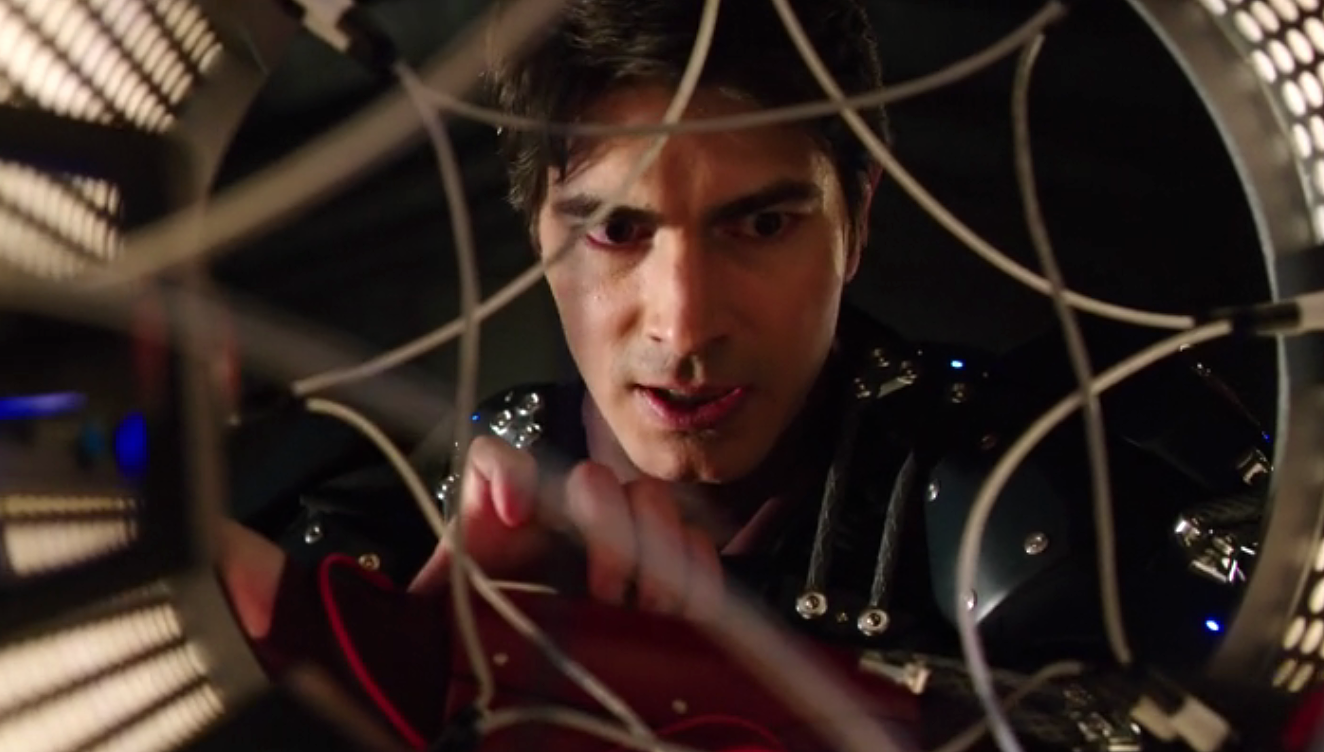
Legends of Tomorrow S1E15 - “Destiny” (and also: the rest of the season)

This is how I imagine a conversation between Doctor Raymond Palmer and the rest of the world would go:

Dr. Palmer: “I just want my life to make a difference.”
The world: “You founded a multi-billion dollar company and created world-changing technologies.”
Dr. Palmer: “Yes, but I just want to be remembered, you know?”
The world: “After you apparently died, we renamed an entire city in remembrance of you. To what greater honor could anyone conceivably aspire?”
Dr. Palmer: “I want. To make. A real. Difference.”
The world: “You know for a fact that in the future, the work you have done will be used in robotics—and presumably many other fields—for generations.”

Following this exchange, an obstinate Dr. Palmer would presumably melt into a puddle of self-loathing. — Etienne Domingue


Aviary Photo_131082617295884059.png

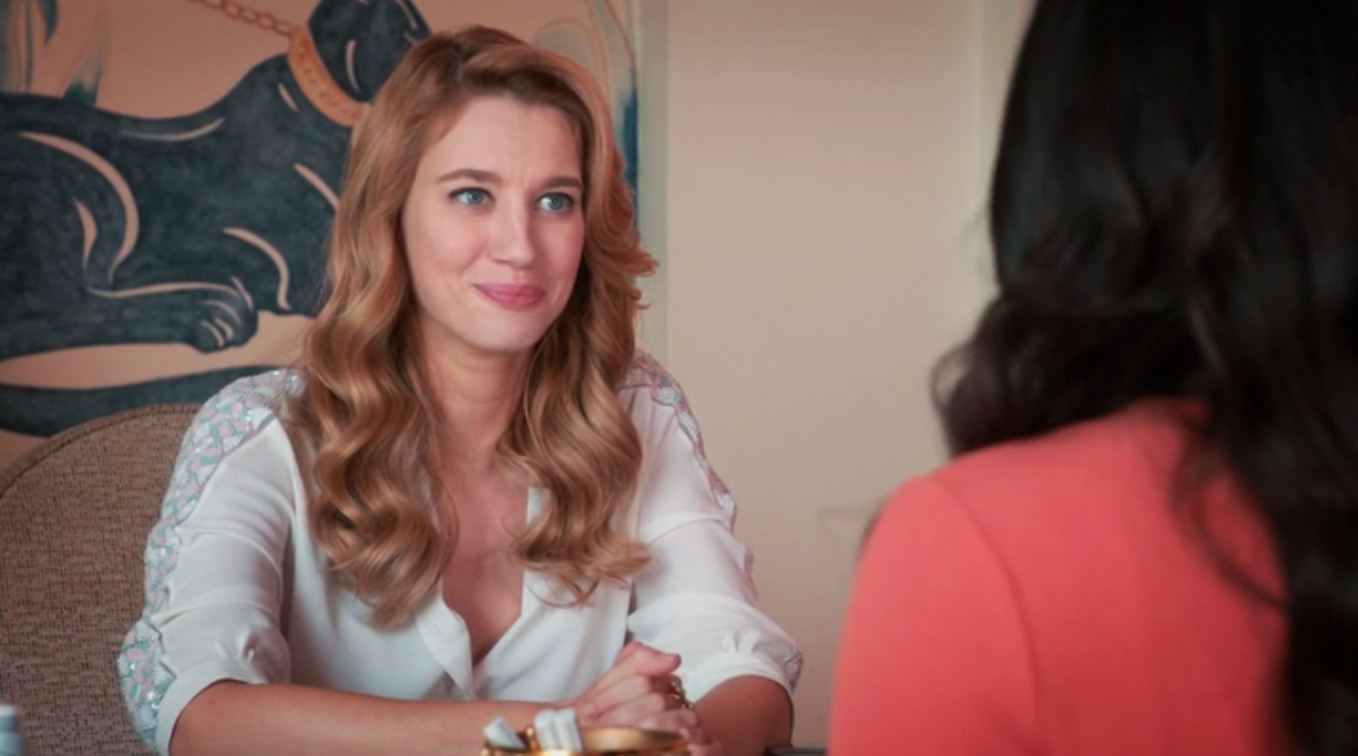
Jane the Virgin s02e21, “Chapter Forty-Three” & s02e22, “Chapter Forty-Four” 

In last week’s episode, Jane and Petra explicitly talk about Petra feeling like a bad mother compared to Jane—but instead of exploring that further, the show carries the theme of competition over into a conflict about whom Rafael listens to more.

I usually think Jane the Virgin manages to dig deep into all of the more relatable relationship issues that balance the dramatic telenovela elements, even when the soapiness is turned up high. When it comes to Petra and Jane’s relationship though, it seems to be constantly overshadowed and pushed aside in order for the rest of the plot to move forward.

It’s a shame, because the show does well with interactions between its complex and varied women. And since the Jane/Petra friend-shipping is strong among the show’s fans (a “fact” I base on the comment sections of three different sites as well as my own opinion, so you know it’s 100% accurate), I imagine more focus on that duo would go over well with the audience.

Let’s hope there’s more of that next season! We all want to know how Michael is, but we also want to know what a long P & J conversation about the challenges of motherhood in a modern-yet-sexist society would sound like.

And perhaps a discussion on who’s the best male feminist ally—Raphael, Michael or Rogelio (#Team Michael #SupportiveFiancésSupportFeminism #TooCoolForMachoDrool). — Tova Crossler Ernström


Aviary Photo_131082615422049303.png


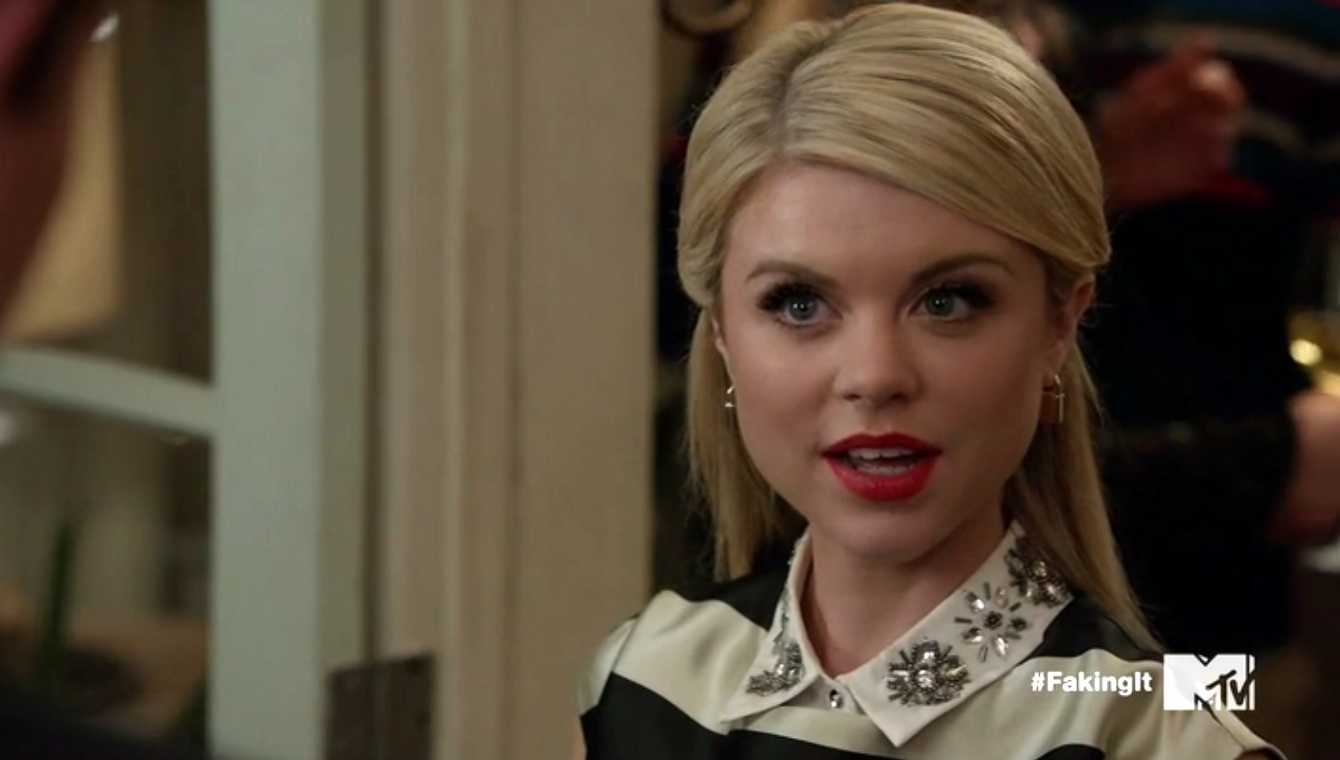
Faking It s03e09, “Ex-Posed”

Last week, Liam decided to set Lauren up with a guy to make her less testy (sigh) and a more pleasant room-mate. When he finds a suitable match, and introduces the two, the conversation goes like this:

Liam: “Hey, I was just talking to my friend Preston about... What were we talking about?”
Preston: “American Exceptionalism.”
Lauren: “For or against?”
Preston: How could there be a question? For.
Lauren: *surprised chuckle* “I thought I was the only person in this school who believed America has a manifest destiny.”
Preston: “Well, so did I”.

Wow. I wish this post was a direct line to the writers and showrunners of Faking It. In that case I would tell them: I love Lauren. I love her so much I accept that she’s a Republican, because it suits the character (though I happen to believe she would vote for a different party if she were real).

But I think I speak for a big part of your audience when I say: No decent, historically-aware person would use the expression “manifest destiny” about the USA in 2016.

Even if Lauren is all about American exceptionalism, that can be expressed without colonial terms traditionally used to legitimize slavery and genocide. I promise you it’s possible. As the post only reaches its handful of readers (none of whom are working on Faking It, as far as I know) I’m telling you instead. Feel free to comfort me with your wisdom and historical knowledge in the comments! — Tova Crossler Ernström