Showing posts with label Tova Crossler Ernström. Show all posts

Vambrace Yourselves: The Great Wonder Woman Roundtable


Despite being one of the three most important characters in the DC universe, it's taken Wonder Woman an inordinate amount of time to get a movie adaptation worthy of her. Until now, the only adaptations of the Amazon Princess's adventures were the Lynda Carter-starring 1970s TV show and the 2009 animated movie.  Otherwise, the character was generally either part of an ensemble or worse, given a side role. It felt like Wonder Woman will never get the chance to shine her fellow Trinity members Batman and Superman got. Even the announcement that WB is making one that'll be a part of their cinematic universe didn't inspire confidence, especially due to the controversial nature of the DCEU, influenced by the general depressing tone and quality of already released films.

But all our fears turned out to be unfounded, as Patty Jenkins's Wonder Woman turned out as well as it did, gaining outstanding critical acclaim and love from fans both old and new —  breaking box office records all over the world. After this undeniable success, the future of female-led superhero movies is looking brighter than ever.

Naturally, we here at Critical Writ have our own thoughts about Wonder Woman. We've already released our review of the movie, written by our own Elessar and now it's time for our other members to discuss how the film affected them.

Warning:  We do discuss spoilers below!  


Let's begin by sharing our personal history with the character. Are you a new-fangled fan, or were you already very familiar with Wonder Woman?

Tova: I’m very new to Wonder Woman. I borrowed the Sensation Comics anthology with Wonder Women stories from the library just before the movie premiered and had read some of that, and I read the first volume of DC Bombshells, but that’s the only experience I have with the character outside of hearing and reading about her. I’ve also frequently used the GIF of Lynda Carter smashing the patriarchy, of course.

Adrian: I’m very familiar with the comics and animated stories! I’m a fan of Greg Rucka’s various runs, Gail Simone is my hero, but the Justice League cartoon stands out as having the most on-point Wonder Woman. Susan Eisenberg’s voice work epitomizes Diana much like Kevin Conroy is the definitive voice of Batman. I love Diana so much that once aspiring to write a Wonder Woman screenplay served as a catalyst for growing my creative writing skills.

Rosario: I am very familiar with the character, insofar as “half-remembered fragments of Lynda Carter’s show” and being a long-time fan of the DCAU. Even now, getting comics in my country is a tall order, so I never got into them. But Diana was always one of my favorite heroes. My love of all things mythological just cemented my love for her.

Megan:  I’ve been reading Wonder Woman now for almost ten years; it was Gail Simone’s The Circle that really made me a fan.  I wanted to get into her earlier, but I always thought her costume (the one with the star spangled panties) was utterly ridiculous.  Terry Dodson drew her to make her look so powerful, so it was when I saw the cover for The Circle that I felt I could really get over that.  Ever since, I felt like DC had the greatest superhero ever on their hands that they just weren’t promoting well.  If you’re a longtime Wonder Woman fan, it’s the same as being a long suffering Wonder Woman fan.

Ivonne: I’m pretty new to Wondie. I mean I know Lynda Carter’s Wonder Woman, and that’s about it. I never read the comic books before last year, and I’ve only read a smidgen of stuff since. Mostly, everything I know about Wondie I know from the DC animated movies/series, and word of mouth.


What are your overall feelings on the movie?

Adrian: Relief. It’s been a rough five years or so for DC fans. The comics went through a contentious period with the New 52 and the DCCU has been struggling to find its footing. It had grown hard to imagine that DC fans would ever “get to have nice things.” Patty Jenkins delivered a fun, tonally-accurate, and explosive adventure. I feel, for once, hope for the DCCU.

Tova: I’ll answer this question in a very literal way: Many and intense! There’s a lot of joy simply in seeing a badass heroine at the centre of a story, but when empathy is one of the central characteristics of that heroine, that joy turns much stronger and bigger. Perhaps the sadness in the movie was also heightened as a result, because I felt that more intensely than usual with epic adventure movies as well. And a strange kind of protective love for mankind that most of the type of humans and human actions we see in this story really shouldn’t inspire but which Wonder Woman is full of. It was definitely an inspiring movie. I’m aware I’ve likely ignored many issues with the plot because of all these emotions and the awe it made me feel, but that seems like minor details when a movie gives you this kind of experience.

Rosario: I agree with Tova, I am probably being more forgiving of the film due to the sheer excitement of seeing Diana in the big screen. Do understand, that for me has been a really, really long time. The other DC animated film about her I keep hearing about? I don’t even think it’s dubbed, there are no DVDs of it being sold here, it hasn’t been aired so far as I know… It has been a really, really long time. The hype has been so real here, with people going multiple times to the cinema for Wonder Woman. This is not something we do here. When I sat in the cinema and saw Themyscira for the first time it felt—wow.

Megan:  Like Adrian, relief.  You’ve come a long way, Diana.  I’m so happy that not only did she get her first big budget film, and not only is it a critical darling and box office success—it is a movie that is in love with Wonder Woman and everything she represents.  Despite the changes from the comic, the movie gets to the heart of what makes her so damn lovable.  I feel vindicated, and I am so happy that millions of people now have a chance to love her too!

Ivonne: Relieved that it didn’t suck! This was the one movie DC needed to get right, and they did, apparently more by accident and lack of care, than by design (they gave Jenkins pretty free reign, and seemed quite surprised by the success of the film). I’m a Marvel fangurl first and foremost, but I needed WW to do well, for the express reason of kicking Marvel in the ass so they start acknowledging their female fans… and so that they don’t screw up Captain Marvel. As for Wonder Woman itself, I loved it. It was inspiring, visually beautiful, and one of the only movies I’ve seen come out of Hollywood that wasn’t male-gazey. It was, in a word, wonderful.


How did you find the plot? What do you think about the the movie's version of Diana's origin?

Adrian: I feel great affection for the clay baby origin, but the New 52 ret-con establishing Diana as Zeus’ daughter opened up a whole new, exciting wing of her family tree that was previously non-existent. So much potential here! And yet, it seems they scuttled all those possibilities in the few minutes of Wonder Woman, establishing that the entire pantheon of gods were eliminated in Zeus and Ares’ great conflict. The plot perfectly serves Diana’s character growth and while I’m thankful for that, I mourn what could have been, and hope for a return of the gods in sequel.

Rosario: I am extremely ignorant of the comics. I know the broad strokes, and with all the controversy the New-52 retcon drudged up it was all but impossible for me to ignore, so… This is the first time for me encountering Diana’s origin, so I am… blasé, maybe? It’s a good story as any. It is suitably mythological for me because of the incestuous undertones: The Amazons were created by Zeus, so kind of like his daughters, then Zeus and Hippolyta had a clay baby. To me it was more important how the film emphasized how it was the Amazonian society that gave Diana her morals, and how it was Antiope’s and Hippolyta's love what shaped her into the woman who became a heroine.

Tova: I really liked the idea that Diana doesn't have a father, even in the biological sense, but only a mother. Her entire history and heritage being female is just so appealing to me, especially considering no one ever suggests there's something missing there — her family and childhood is whole and full. Like Rosario says, the film still emphasizes the women around Diana, and it's clear they're the ones who shaped her. But you don't go "By the way, you were told a lie about your origin and Zeus is actually your father" and then not examine what that means for the character. I'm not looking forward to that examination (sorry!).

Megan:  The plot, overall, is fairly in line with what we’ve seen before in the comics.  Unfortunately, the goddesses involved in her creation are gone, boo.  But it’s not the New 52 origin, which I was dreading.  The clay baby origin is always my favourite, and while there was a quick line that suggested that wasn’t true, that person wasn’t under the sway of the lasso yet, I don’t think, and so I’m choosing to ignore it.  I just wish there was a cinematic of the clay baby coming to life and the Amazons crowding around the one child they ever had, or that they included that they were reincarnated from abused women.

Ivonne: I’m not a fan of all the goddesses having been killed, but I don’t mind Diana having a father. Although, not going to lie, when it was revealed that he had sired Diana on Hippolyta, my immediate thought was to wonder what animal he turned her into to rape her, since Zeus is kind of known for that. I know, pretty awful, but there you have it. Zeus was very… clean in this version of Greek mythology. But I guess he’s dead, so whatever. I’m fine with not having him present in her life.


How did you feel Gal Gadot fared in the role?

Tova: Great! She has such an expressive face, and I love how you get to see the outside world reflected through her eyes when you watch her watch it. Like when Diana first encounters soldiers wounded in the war, or the people in the French village they reach after going through No Man’s Land. I’m ashamed to admit it, but I’ve grown somewhat immune to similar scenes showing war after so many movies have used them, and they don’t pack the same emotional punch anymore. But thanks to Gadot’s acting (and probably the writing and directing as well) these scenes do work, and it makes the whole story more engaging, as it gives us great insight into Diana’s motivations in her quest to end the war. Then she puts on her warrior face, and the determination behind Gadot’s eyes is just as convincing as the compassion.

Adrian: I’ve been a fan of Gal since her work in the Fast & Furious franchise. Gisele and Han OTP! I think she did a good job in accurately expressing Diana’s warmth, determination, conviction, and purity of heart. I don’t feel like Gal’s talent as an actress has grown much past her days in Fast, but I think I’m in the minority on that assessment: after all, she did make millions of people cry!

Rosario: She pulls off the naïvety so well. I don’t remember much of her prior work, thus, I cannot comment on that, but when she runs up, excited at seeing a baby, when she was eating the ice cream and thanked profusely the vendor… Gadot was amazing. The way Diana marveled at her own power was also very good acting. She was occasionally weak when she had to be more serious, but maybe that could be interpreted as Diana being somewhat confused at the stupid morality of Man’s World, so I don’t give much weight to it.

Megan:  Fantastic.  There were a few lines I thought were clunky, particularly the narration at the beginning and at the end, but it could have just been how it was written.  Those were my only gripes, and I quickly forgot it once the film got going.  When she was cast I was disappointed that they didn’t go with an actress who was more muscular; yes, I was one of those people!  And I will admit I was wrong.  Gadot looked powerful and strong.  I totally believed she could lift a tank like it was nothing.

Ivonne: Back when Gadot was introduced, I wasn’t sure I liked her. And on a political level, I don’t, because her politics regarding Palestine is typically Israeli. That said, and setting dubious politics aside, I thought Gadot was fabulous in this role. She really owned it, she seemed to revel in it, she looked gorgeous and powerful. She was so expressive in her wonder when Diana is first running around London, and yet she never comes off as naive or stupid. Gadot ended up being perfect for the role despite my initial misgivings.


What are your thoughts on the film's supporting cast - the characters adapted from comics (Steve, Etta) and the original ones (Sameer, Charlie and Chief)?

Adrian: Etta was exceptional; we need more of her. In the past, Steve has pointedly been Diana’s damsel in distress, but in the film they succeeded in making him more than a mere love interest, but a friend and an inspiration. Diana deserves no less. I really enjoyed the original characters, but much like Etta, I’m saddened that we can’t expect to see more of them.

Rosario: Steve was so charming, I truly hurt for Diana when That Scene happened. Because of how much the trailers featured Etta, I was disappointed that we didn’t get more of her in the film, so I hope there is a director’s cut or extra scenes or something when we can appreciate more of her, as well as have more of the trio. Overall, I thought the supporting cast was great, especially their interactions with Diana. My favorite was Chief, mainly due to the potential of his character. In a universe where the gods existed, could it be really that he is a demigod? I sure hope so! I hope he appears in more films! Also, I liked how the Soldier Trio represented something about war. Sameer is the person with no other hope than to join the war, Charlie is the soldier who struggles to try to make something of himself in a war he doesn't know what it stands for anymore and that has damaged him, and Chief is the one so hurt by conflict that he is just numb to further conflict. That’s what they are until Diana comes along.

Megan:  I love Etta!  More of her please!  If her sequel is modern day, can she have been reincarnated?  Same actress in the role of Smetta Smandy? Steve was great.  The animated movie kind of poisoned his character for me (he’s a chauvinist pig in that one), and Chris Pine is kind of a similar character in the first Star Trek film so I was anticipating something similar.  But Pine did a fantastic job and I really loved him in the end.  Sameer, Charlier and Chief were great; I really love that the film didn’t shy away from the fact that this was a war of colonial powers that brought men of colour from around the world to fight in a war they had no real stake in.  I also hope the theory that Chief is a demigod himself is true, I’d love to see him in the sequel.

Ivonne: Chris Pine was another surprise for me (along with Gadot). I thought he did a fabulous Steve Trevor. He was never over-bearing, despite probably thinking Diana was a little bit crazy, and ultimately he proved himself to be respectful of her and her power. I was pleased at how well Chris Pine, a leading man normally, seemed to naturally take to the role of supporting actor to Gadot. As for the Howling Commandos Lite, they were pretty good. If I have any complaints, is that we maybe didn’t get enough of them. They grounded Diana, humanized the faces of this terrible war, and they did it well.

Tova: I don’t think there’s much to add here! I always like a good ragtag team of misfits, and then one here did not disappoint. Like the others have said, I would have liked to see more of them, and more of Etta Candy, so I’m a little sad the sequel will take place in the present.
I’ll also miss Steve, who really was a pleasant surprise.


What are your thoughts on how the movie handled its human and supernatural villains?

Adrian: Dr. Poison was very intriguing, another character who I desperately want to know and see more of. Ludendorff and Ares were a bit two-dimensional, but I felt like Dr. Poison could carry a whole film. Could we get extras and vignettes like they did for the MCU? Ares serving as a violent muse to mankind has some interesting tendrils to explore, but ultimately it seemed to diminish the depth of the human villains.

Rosario: We definitely need to see more of Dr. Poison. Elena Anaya’s interview with The Verge uncovers so much I am thirsty. And I didn’t even know it! That said, while I agree that Ludendorff and Ares need to be explored more, I think I may be one of the only people who disagree with the assessment that the film did not serve itself by having Ludendorff and Ares be stereotypical villains. I actually liked that Ludendorff was like a human version of Ares. It really set up that Man is the best (as reflected by Steve and Etta) and the worst.

Tova: I think it was necessary to have human villains, for the reason Rosario describes, to show personifications of the worst as well as the best of humankind. I do not agree about Dr. Poison. To my, admittedly limited, understanding of the DC world of heroes and villains, one of its biggest issues is that villainy there very often comes from mental illness. It’s so full of mentally unstable villains that an asylum for the “criminally insane” is one of the main locations of DC stories, and a large share of Batman’s enemies have been patients there. Along with that there’s also the more widespread trope where disfigurement or disability (the two often being intermixed in pop culture) either serves as a sign of evil or itself leads to evil.

One of the clearest examples might be Two-Face, who is driven insane and adopts his villainous persona after being severely scarred on one side of the face, and is often portrayed as suffering from schizophrenia, bipolar disorder and/or dissociative identity disorder.

With this in mind, to have a villain who is obsessive, sadistic and “a maniac”, and whose “hideous” facial scars are described as proof of her sadistic side (all descriptions from the Anaya interview) seems to me to reinforce all those harmful tropes. I think Dr. Poison is a step up from characters like Two-Face, but then, why use that category of storytelling device at all? There are so many better options out there.

Megan:  The villains just weren’t developed well, but I think that was okay for the story they were trying to tell.  It wasn’t really about who the big bad was, because the real danger is the potential for evil that is in every human.  That said, what I like about Wonder Woman comics is that she really gets to the heart of her villains and often wins them over to her side.  Part of me wishes we saw that with Dr Poison, the last big fight could have been cut down and we could have had some resolution between them.  On the other hand, an unrepentant female villain is so rare, outside the femme fatale trope.  She’s scarred, she’s mean, she’s not sorry, and she’s not not going to fall for a pretty face, Steve.

Ivonne: I really wanted more of Dr. Poison. I felt like there was a great deal of development left at the table with her. But she was convincingly evil, and I was glad she didn’t fall for Steve’s shenanigans at the party. The actress needed more room to shine, because honestly, she was fabulous.

I thought the use of Ludendorff was a strange choice, seeing as he is an actual historical figure from WW1 that survives that war to get somewhat involved with Hitler prior to WW2. Making the choice to kill him was odd, to say the least. They could have called that character anything, made up a name of a fictional general, so why use a real historical figure? Add to that, I guarantee that most American audiences don’t know the name. It’s not that he’s obscure--he’s not--but American history courses are woefully short when it comes to anything before WW2. European audiences probably knew Ludendorff quite well, though, and especially his history.

Ares was… okay. The final battle was all kinds of cool CGI, but it was weird to see Professor Lupin as the god of war. For all that Ares was the boogeyman that Diana chased the entire movie, he wasn’t particularly frightening. That said, I will give kudos to the fact that I never saw it coming that this particular character was Ares. Normally superhero films are fairly predictable, so it was nice to be surprised that way.


What did you think about the movie’s use of the World War I setting, as opposed to WW2, more traditionally connected to Wonder Woman’s origin?

Rosario: I thought it was brilliant, actually. It’s one of the best settings to learn about the murky world we live in, at least for an Amazon warrior. The War is one of the murkiest conflicts ever. The War was arguably started by the Black Hand, an extremist Serbian separatist group, when Gavrilo Princip killed Archduke Ferdinand. It is a prime example of a “your terrorist are our freedom fighters” scenario. The whole thing was magnified by allies dragging each other into war, treaties falling apart all over the place—just look at how the Kingdom of Italy went from the Allied side to the Triple Entente side. It’s really tragic as well how it strips away Diana’s conviction that we are so inherently good. Yet, she chose chose to fight that final battle, anyway. Had I not known from hearsay her comics’ origin is in World War II, I would never have guessed, since The Great War feels so thematically appropriate for Wonder Woman.

Tova: This is where I have to admit I thought the movie took place during WWII all through watching it. Quite embarrassing, but also regrettable for the dimension clearly lost on me because I wasn’t aware of the context! I love Rosario’s analysis here, and in hindsight it truly does enhance the themes of human nature of good and evil and, especially, the grey area in between.

Adrian: There's a lot of thematic symmetry between Diana's first experiences with Man's World and mankind itself coming to grips with the new horrors of modern warfare, so I think the setting world worked beautifully. One of the trailers that ran before Wonder Woman was Dunkirk, the story of a massive rescue operation to save Allied soldiers from the Germans in WWII. A rescued soldier, fearing for his own life, balks at prospect of returning to Dunkirk to save more lives, when the ship’s captain tells him "There's no hiding from this, son. We have a job to do." It's that same call to duty that soldiers faced in WWI, and in a way that had never been experienced before. You won't have trouble finding exceptionally bloody episodes throughout history, but the first World War set a gruesome new standard in suffering, appallingly prodigious in death count; something the world had not previously seen or imagined. Life in the trenches of Verdun was so deadly, so bleak, it's what directly inspired J.R.R. Tolkien's vision of Mordor in Lord of the Rings. Indeed, the never-ending battle of attrition that is “No Man’s Land” set an ideal landscape in which Diana could arise, crossing the chasm that no man could, establishing not just to the audience but to herself, that she can make a difference, even when the task before her is an impossible one.

Megan:  For the story they’re trying to tell, it was a perfect change.  With WWII, you have the Nazis vs the Allies and I think we can all agree that while Allies committed war crimes too, it’s largely accepted that it was a war against evil.  WWI wasn’t about that.  It wasn’t good versus evil, us against Nazis and genocide.  It was empires with stolen lands forcing men to fight over, essentially, nothing.  It wasn’t a war any side can really feel good about.  It was a terrible, pointless  war that should never have happened at all.  I really liked that in the British war council, the general was all for sacrificing soldiers, and on the German council before Ludendorff attacked would not stand for any more lives being lost.  The Germans weren’t any more to blame here than the British.  That and you know, the reveal about Ares, really hit that home.

Ivonne: It was a nice change of pace to have WW1 be the setting, but for all of that, this movie still felt a great deal like Captain America: The First Avenger in the entire latter half. Also, I heard that there were American audiences who were puzzled on which war it was, but honestly, that says more about the public education in this country than anything else. The movie “placed” the setting quite well, between the language Steve used to try to explain it to the Amazons, and the trench warfare. Costumes, props, and things like the planes were gorgeously done to make this period piece work.


What did you like the most about the film? And what you thought was its biggest failing?

Adrian: I have some minor quibblings around Diana’s naiveté (a bit overdone) and the mythology (for instance, they didn’t cover why she wears the bracers or the nature or purpose of their power), but the biggest failing of the film was a lack of representation. Many have rightly said Wonder Woman is inescapably a feminist film, which is why the film is remiss regarding intersectionality. Anyone not hopelessly insulated recognizes the Amazons of Themyscira as queer, yet this is never represented on screen. While the racial diversity could have been worse (I love that Artemis, of an African Amazon splinter-cell Bana-Mighdall, was played by Ann Wolfe!), many Amazons' scenes were cut. With the core cast of Amazons being blonde and white, we’re left with the same old story: white women elevated to the forefront of modern feminist ideals, with women of color unobtrusively shuffled off to the side. While Gal Gadot provides much-needed representation for Jewish women in superhero films, we cannot ignore that “Hollywood perceives her in terms of unspecified whiteness.” Otherwise, I will forever love Wonder Woman for simply getting Diana’s character right. The depiction of Themyscira and the Amazons was otherwise near perfection and the proper tone of the film could serve dividends for the whole future of the DCCU. Wonder Woman is a great movie.

Rosario: I don’t have much to add to this, since I mostly agree with Adrian in failings and strengths. More explanations, more diversity in the Amazons is needed. That said, the combat scenes were well done, the slow-mo was in all the right places.

Tova: If it’s not already clear from the amount of words I used to criticize the character, Dr. Poison is one of my least favourite parts of the film. Anaya plays her splendidly, but I can’t disregard the problematic elements, which are really at the foundation of the character.
One other thing that has kept tugging at my mind since I first thought of it is: Why the hell is there no mention of Wonder Woman returning, or not returning, to Themyscira at the end of the movie? It’s almost like the Amazons are forgotten. That doesn’t fit the tone in the first part of the movie, and certainly not the parting of Diana and her mother. Themyscira is such an important part of Wonder Woman’s story, and I would have liked to see that acknowledged as this first story wraps up.

As for what I liked the most: The feelings! The feminism! The wonder! I suspect everything that has made people love Wonder Woman for decades

Megan:  Not to correct you Tova, but Hippolyta says to Diana as she leaves that she can never come back.  This is a thing in the comics; once she leaves, she may never return.  Of course, in the comics she eventually does, and since Amazons are going to be in Justice League we should get an answer.  I do agree with Adrian about representation, could have been better.  I also really wish Diana was less confused by sexism and more outraged by it.  I suppose that would have clued her into the evils of man sooner, unless she would just conclude the patriarchy is a tool of Ares as well. As for what I liked most….Themyscira!  It was everything I wanted and more.

Ivonne: I loved the way this movie made me feel. I loved seeing a powerful woman who was still feminine and beautiful. I loved that she wasn’t filmed under the male gaze. I loved Themyscira and wanted more of it. More Amazons, more Amazons of color, especially. And as Adrian has already pointed out, the film’s biggest failing was how powerful the white feminism was, but how short it was on representation of anyone else. Yes, we saw black Amazons, and some brown ones too, but they didn’t speak, and one of them was even the Mammy stereotype when Diana was a child. Oooo boy… as a feminist piece, this one has major failings on intersectionality.

I’m not sure if this is a failing or a strength, but I did feel like someone at WB looked around, asked why MoS, BvS, and SS were so critically panned while Marvel has had a dozen hits, and decided “screw it, if you can’t beat ‘em, join ‘em.” Wonder Woman felt, emotionally, like Captain America: The First Avenger to me, and it pretty much even ended the same way. When the movie ended, my husband leaned over and whispered, “Steve will be back in Wonder Woman: The December Soldier!” But seeing as how The First Avenger still remains one of Marvel’s best films, I suppose this isn’t a failure for Wonder Woman. And well, it’s no accident that so many folks, including critics, loved this one, as opposed to the first three DC films.


Finally, let's make a wishlist for the future sequel, which is obviously coming thanks to the movie's reception. What would you like to see in it, aside from the return of Patty Jenkins in the directorial chair? What are your biggest hopes and greatest wishes?

Adrian: More women of color, more Amazons, more gods, more magic! Villains! Cheetah, Circe, and Medusa (see: Wonder Woman: Eyes of the Gorgon by Greg Rucka) would all make great villains for the sequels! Sidekicks! Can we get Wonder Girl Donna Troy and/or Cassie Sandsmark? An Artemis and Antiope buddy warrior movie?! I want all the things! Also, it’s implied the canon that there is a lineage of Amazonian Wonder Women throughout history. Can we get a Hippolyta as an ancient world Wonder Woman prequel? Can we see Nubia, Diana’s twin sister as Wonder Woman? There definitely were Wonder Women before Diana; what else would the suit have been made for?

Tova: More Amazons, which should naturally lead to more WOC and queerness. And it’s not enough to show that other Amazons are queer, I want an unambiguously pan- or bisexual Wonder Woman as well, and I want it treated with the same subversion of the male gaze that much of this movie showed. If I can dream big then bigoted straight men will watch the sequel and feel annoyed and let down, and cool men, women and non-binary folks will leave the theatre feeling empowered. I want a movie that truly deserves the label “cultural Marxist SJW propaganda”. Because we’re worth it.

Megan:  I think as long as China bans any movie with outright LGBT representation, we’re not getting it in a Wonder Woman film.  That would be my greatest wish though. But more Amazons, Nubia, Smetta Smandy, Chief, The Holliday Girls, and Ferdinand please.  Also, WB, email me about my amazing Wonder Woman RPG idea.  The lasso mechanics alone will be worth it.

Ivonne: More Amazons, more women, more women of all colors, goddesses returning, some of Wondie’s classic female villains… and that’s to start! Also, needs more lassoing, and definitely an invisible jet (I’m kidding, that’s stupid). But seriously, I just want more Wonder Woman, and more Patty Jenkins, and LOTS MORE FEMALE DIRECTORS AND STARS. And I want it right now!

Adrian Martinez is a graphic designer, comic book letterer, hobbyist writer, and all-around geek living in New York City.

Dominik Zine is a nerdy demisexual lad from northeastern Poland and is generally found in a comfy chair with a book in hand.

Ivonne Martin is a writer, gamer, and avid consumer of all things geek—and is probably entirely too verbose for her own good.

Megan “Spooky” Crittenden is a secluded writer who occasionally ventures from her home to give aid to traveling adventurers.

Rosario is an early-twenties, outspoken woman, who likes to burrow between piles of books, and store miscellaneous trivia in her head.

Tova Crossler Ernström is a bisexual Swede, feminist, socialist, INFJ, Hufflepuff, HSP and Taurus. She is fond of personality tests, labels and lists.

Your 2016 Sexy Costume Options

You can do better, fellow intellectuals. Read on.

It’s Halloween. If you’re the personable type, odds are you have been invited to a costumed event. You may already have plans, but does your costume show off your smarts while living up to the time-honored tradition of unnecessary sexualization? We didn’t think so.

Here are three suggestions to replace your subpar costume with something that's both culturally-edifying and sexually-objectifying. You’re welcome.

Sexy Ursula K. LeGuin
Ursula K. LeGuin is an American science-fiction and fantasy writer who greatly influenced both genres with books like The Left Hand of Darkness, The Dispossessed, The Lathe of Heaven, and an entire series of Earthsea novels and short stories. Her writing brilliantly depicts alternate worlds, each with their own masterfully-constructed gender and sexual politics, economies, environments, religions, and ethnographies.

To dress up as Sexy Ursula K. LeGuin you need to:

  • dye your hair gray;
  • wear casual clothes;
  • write influential fiction and literary essays;
  • have terrible luck at Earthsea adaptations. (Dominik)

Sexy Michel Foucault
Michel Foucault was a French philosopher, social theorist, and overall badass intellectual who wrote extensively on power, knowledge, and knowledge-power.

To dress up as Sexy Michel Foucault (who is the same as regular Foucault), follow these simple steps:

  • shave your head; 
  • put on a pair of thin-framed glasses, a white turtleneck shirt, and a suit;
  • memorize at least five of Foucault’s most abstract, intellectual, and perspective-shifting quotes; 
  • practice his gestures. Especially the balls-grabbing one. 

The last two steps are most essential. Think of this less as a costume, and more as a character study in how to turn yourself into a sexy subject. (Tova)

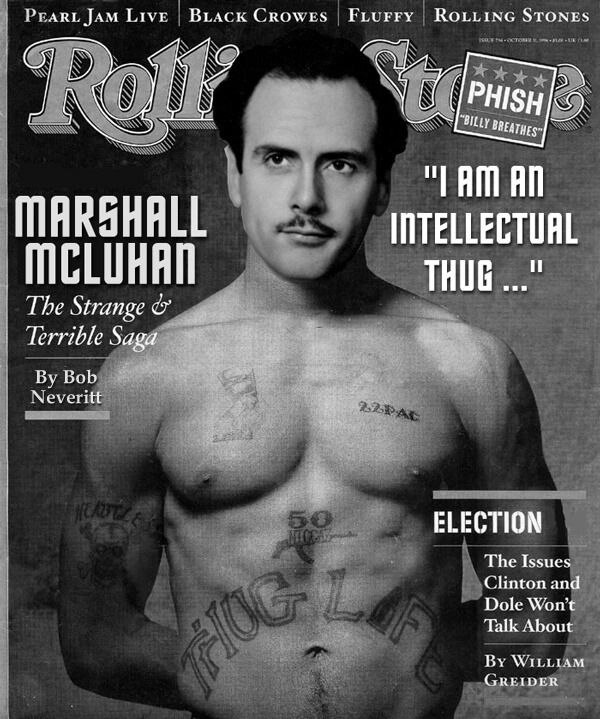
Hunky Marshall McLuhan
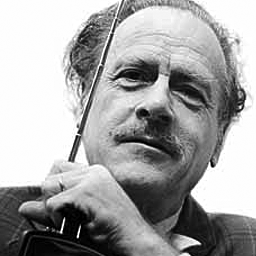
Herbert Marshall McLuhan was a Canadian public intellectual who defied disciplinary parochialism to expound a complex hermeneutic of media influence.

To go out as Hunky Marshall McLuhan, simply do the following:
  • grow a mustache;
  • comb your hair back with pomade, but not all of your hair. Leave room for some chaos;
  • don a woolen suit, white shirt and striped tie. For sexier results, cut off your sleeves to show off those thuggish guns of yours;
  • speak in dense aphorisms. For instance, you might say that "we shape our tools, and then our tools shape us"—or you might not. The important thing is to be misinterpreted for decades. If someone calls you a “technological determinist,” you’re in the right ballpark;
  • team up with your friends and go out as the Toronto School: have them dress up as Handsome Harold Innis, or Foppish Northrop Frye. (Etienne)

Dominik Zine is a nerdy lad from northeastern Poland and is generally found in a comfy chair with a book in hand.

Tova Crossler Ernström is a bisexual Swede, feminist, socialist, INFJ, Hufflepuff, HSP and Taurus. She is fond of personality tests, labels and lists.

Etienne Domingue is not currently on fire. Ask again later.

Ghostbusters: A Post-mortem Roundtable


Ghostbusters arrived in theaters to excited audiences and critical acclaim. Rotten Tomatoes holds it at a steady 74% Fresh, far from the dumpster fire many nay-sayers had predicted. Be that as it may, the box office receipts have been lower than hoped; the sequel is supposedly being shelved in favor of an animated series, a move that could be the result of an unfair media narrative. The debate rages on, but with the premiere a month past and the dust mostly settled, the team here at Critical Writ HQ has been mulling over one of our most highly-anticipated films of the summer.

———

Adrian: Before we move on to our critical examinations, let’s get fan squee out of the way. What was your favorite part? Who was your favorite ghostbuster? I think Holtzmann is nearly everyone’s favorite, but I got super excited just seeing their new Ghostbusting tech. I loved the original Ghostbusters, but I don’t remember ever being so excited to wield a proton pack until I saw the new movie.

Dominik: Well, I’m not going to differ much from the general public—I very much got Holtzmanned. Other than the obvious, I loved the tech, I loved the growing friendship between the four women, I loved how Patty was an important part of the team (unlike poor Ernie Hudson’s character, which suffered immensely in the script re-writes for the original film). Oh, and Sigourney Weaver’s cameo. If there’s a sequel, she needs to be in it. And, finally, I loved how Patty and Holtzmann bounced off each other, chemistry-wise.

Zachary: I can’t name my favorite part, all of it was so great! If I had to pick, then I suppose I would say some moments that stand out. Firstly, Kristen Wiig as Erin. She was a standout on Saturday Night Live, and it’s the same here. As for a scene? The first moment that comes to mind would be the ghost battle near the end, purely for the creativity.


Tova: I’ll echo the love for the ghost battle. All of it was pretty great, but the moment Holtzmann picks up her new weapons and goes 100% badass is my absolute favorite. It’s not the gun licking sexiness that gets me (though I loved that too), but the liberating feeling of seeing a woman kick ass in such a joyful way on the big screen. I had actual tears in my eyes, which I didn’t get from any of the more emotional scenes of the movie. I don’t want to sound too dramatic, but it almost felt therapeutic. Like I’ve been poisoned by years of seeing women victimized, objectified and silenced in pop culture, and this is the antidote. (See? Not dramatic at all!)

Lacey: I loved Patty. She was by far my favorite part of this movie and Leslie Jones is my new favorite comedian. I'd even go so far as to call her a genius. There wasn't a moment in this movie where I thought she wasn't funny and I can't wait to see what she decides to do going forward.

Ivonne: As much as I enjoyed Holtzmann, I have to agree with Lacey that Patty was my favorite. As a Liberal Arts major, I feel like pointing out how great it was to see a woman who is not only funny, but also intelligent and important to the team despite not being a scientist. Humanities people can be wickedly intelligent too, and Patty's historical knowledge was awesome. If anything, I wanted more of that! Favorite part? I don’t know, there were so many! I kind of really liked the gorgeously rendered lady ghost in the mansion at the beginning. The end battle with Holtzmann kicking ass and taking names was amazing, though.


———

Adrian: Another piece of business, how does this film compare to other Paul Feig comedies and the original Ghostbusters film? I didn’t find it as funny as Feig’s other movies (like Bridesmaids or The Heat) but far funnier than the original, which was more about the spooky action and adventure.

Zachary: I wouldn’t say that it was as funny as Spy, mostly because it didn’t have a James Bond parody spouting completely outrageous stories. On the other hand, it was funnier than The Heat by a large margin. It definitely kept me laughing throughout the movie, but I could tell that if Paul was allowed to, he might have made it an R-rated film, similar to his other comedies. In terms of the first Ghostbusters film, I didn’t really like it. Maybe it was the mood that I was in, maybe it was the weather, but for whatever reason, it didn’t make much of an impression on me. I ended up giving it a C-, compared to this movie’s A.

Dominik: If I’m being honest, I don’t have much experience of Paul Feig's movies other than Spy. As for how it compares—I’d say Spy is a little funnier (Jason Statham is an underutilized source of comedy), but with Ghostbusters I was enjoying myself relatively earlier than with Spy.

As for the original Ghostbusters—I never was much of a fan. I didn’t grow up with the movie, and when I actually saw it, I’d say there were bits I liked and bits I didn’t like—the latter primarily centered on Venkman, the movie’s de facto main character. I liked the new movie much more, especially since all four characters were on more of an equal footing, and they became more of a group of friends than the original’s “two nerd buddies, the asshole that really doesn’t need to be there, and the severely underutilized Black guy they hired."

Tova: Hang on, aren’t men supposed to love the original and hate the new movie? I’m in Opposite Land!

I think the 1984 Ghostbusters had a weirder feel to it—Bill Murray’s character is odd and often nonsensical or off-beat, and though I don’t find him very sympathetic, I appreciate this quality. Weird shit happens in Feig’s movie as well, and the characters are far from regular Janes, but it feels more familiar, the comedy is a little more obvious (but not less clever!) and the characters make more sense. That last thing makes it easier to love the 2016 Ghostbusters team, and as a result, the movie. But if I was grading solely based on overall quality, the original might win.

The only other Feig movie I’ve seen is Bridesmaids, which is better than Ghostbusters, but also contains a drawn-out poop joke. Bonus points for lack of poop jokes.


Lacey: I'm going to go out on a limb here and say that I don't think it's fair to compare Ghostbusters to any other Paul Feig film. He hasn't done a sequel or a reboot before and this movie came with a lot of baggage. Not only were they introducing a whole new generation to the beloved Ghostbusters but to the dismay of fanboys everywhere, now there were female Ghostbusters. I'm no stranger to Internet haters, but this movie was like a shiny beacon for misogynist Internet trolls. I’d venture a guess that social context dictated a lot of decisions behind the scenes, and Feig might not have had the creative control he had with previous projects.

Ivonne: I was a fan of The Heat and Spy, and I think maybe overall they were better films. But there was something really magical about Ghostbusters. Maybe it was watching ladies kick ass without the male gaze, or just that they were really good comedians. I enjoyed this one more, if that makes sense. As far as the old Ghostbusters goes, while I was born at the right time, I just didn’t enjoy it as much as a lot of people did, I guess. As a kid, I was always puzzled by how much of a jerk Venkman seemed to be; as an adult, he bothers me a lot more. I don’t hate the old Ghostbusters, it has its entertainment value but I just don’t have the nostalgia goggles that a lot of people of my generation seem to be wearing.

———

Adrian: Any disappointments or critiques? I’m disappointed the new movie isn’t tied to the original. I’m in love with a version I dreamed up where the original Ghostbusters have been dismissed and consigned to oblivion, with the team having moved on to other lives—except for Ray, old and forgotten in the abandoned firehouse, when a couple weirdos named Holtzmann and Yates wander in with new ideas and tech, and the mantle is passed on.

Regarding the new movie, I find the characters lacking. Erin and Abby felt rather similar to previous roles from Wiig and McCarthy (to be fair, the same could be said about Bill Murray’s classic Venkman). They didn’t resonate with me, but maybe this movie isn’t made for me, which is fine! Holtzmann’s quirky character stood apart from rest of the team, who seemed less inspired. Cicely Strong has that shine, making me wish she’d been cast as a ghostbuster. Patty had lots of jokes and gags, but I would have liked to see her bond more with Holtzmann as Erin and Abby have with each other.

Zachary: I’ll start with the nitpick. Am I the only one who doesn't like "jump scares"? In general, they feel unnecessary and annoying. Not to mention that I always end up falling for them in some way. I didn't like the jump scares in the film. I'm actually happy that one of the trailers ended up showing the first one with the ghostly lady spewing slime because I was able to cover my eyes in time. Next, I found myself completely lost by the technobabble. In small doses, it wasn't so bad. At the middle point, I started to get lost and annoyed. It took me out of the film.


Dominik: I’m not a fan of jump scares, but they can serve their purpose, if used smartly in building the story’s tension. I think I rather expected the jump-scares in this movie to be where they ended up, so I’d put this as a bit of a disappointment.

My biggest nitpick were the cameos—there were way too many of them for my taste, and only Sigourney Weaver's was really enjoyable. Well, hers and Harold Ramis’s bust.

Other than that, I’d say the bits with Kevin unnecessarily dragged. I get that his purpose is to be a gender-switched version of the “dumb blonde” trope of a useless female character who is only nominally part of the team and whose main purpose is to look pretty. But I think those parts of the movie had the weakest jokes most of the time, to the point even other characters’ lines suffered. Though they did pay off a little with the Holtzmann line aimed at the villain towards the end.


Tova: Like Dominik, I found some of the Kevin-related comedy lacking. The fact that the only character who is sexualized in the film is a man is great, and adding stupidity and general lack of competence to that makes it a more clear-cut reversal of the mentioned blonde trope—but I think jokes about stupidity are more effective when the jokes themselves are clever, and with Kevin it seems like the writers took the easy way too often.

My biggest problem with the character, however, is when he isn’t actually Kevin—when Rowan takes over his body. Rowan has very accurately been described as a villain you’re likely to find on Reddit, "toxicity of nerd culture personified." He’s awkward, but not in an endearing way, and his hatred pervades his whole aura. But the moment Rowan replaces his awkward exterior with Kevin’s conventionally attractive one, he becomes—kind of charming? Still a villain, still an asshole, but with charisma. I’m not sure how to interpret this, except that good-looking guys who are evil are still a little likeable. The scenes were entertaining, and Hemsworth sold them well, but in the context of the story they made me uncomfortable.

Lacey: I think that I was most disappointed with the story over all. I realize this was a reboot but I really wanted it to stand apart from the 1984 Ghostbusters and I felt like there was a lot of unnecessary pandering. I am wondering how much of this pandering was an attempt to smooth things over with the disgruntled fanbase. I felt like an all-female Ghostbusters was a huge step in the right direction and then they squandered an opportunity to truly make this movie into a new era for Ghostbusters. That being said, I want to make it clear that these women did a fantastic job—I just think that the overall story failed them.

Ivonne: For my money, the biggest problem with this movie is that it was way too concerned about paying homage to the old movie. I really wanted it to be its own separate entity. Now that they’ve gotten the homage out of the way, maybe if they do a sequel they can go full-out on originality. Like some of the other folks here, I felt that Kevin fell a little flat at times. I mean, I enjoyed him and I enjoyed the fact that Chris Hemsworth was clearly having a ball, but some of the jokes around him were low-hanging fruit. The writers could have done better.

———


Adrian: I want to close by saying I liked the new Ghostbusters. It was funny and the effects had a great look. I wish Sony would produce a sequel, because there’s so much more they can do with the franchise and these new characters. I have high hopes for the animated series. What’s your final word?

Zachary: I absolutely loved Ghostbusters—despite a few issues—and I would definitely see it again. It is definitely a movie tailor-made for comedy fans, with great comedians starring, funny jokes, and an overall enjoyable tone.

Dominik: I loved the movie, I can’t wait to see it again, and I hope to see the characters in another movie (seriously, Sony, you really should have advertised it better).

Tova: I’m going to end with a wish/demand: I want a live-action movie sequel where Holtzmann gets a girlfriend, or five. Feig can use direct quotes from the studio people who told him to keep Holtzman’s sexuality implicit in the movie, to write the lines for some ridiculous homophobe character who immediately gets shut down. It will be great.

Lacey: I really did like this movie and I think we need more like it. Can you name another female-centric action/comedy? Hopefully this is the first of many.

Ivonne: We absolutely need a sequel, haters notwithstanding!


Critical Hits and Misses #10: August 19, 2016


  • There’s going to be a Supergirl/The Flash musical crossover! For real!  There’s also rumors that Joss Whedon will direct the two episodes, but it so far it’s only just that, rumors. Still, a geek can dream.And re-watch Once More With Feeling. (Tova)

  • The downside of having Ana debut in Overwatch a month after the game’s release is that she isn’t part of the vast majority of fan videos. Luckily, Instalok has us covered with a song/music videos, Ana Said, featuring Lunity— a parody of Lukas Graham’s Mama Said. (Dominik)

  • The cast of the female-centered heist movie Ocean’s Ocho just gets better and better. This is a good time to revisit Aya de Leon’s article on Bitch Media, about the opportunities missed through the lack of heist movies with women as the (anti)heroes: “After all, heist fantasies are doubly meaningful for women: The big score isn’t just a way to be set for life, it also offers the possibility of being free from patriarchal control.” (Tova)


  •  Laika’s CEO Travis Knight discusses diversity and casting decisions in a measured response to criticism over the cast of Kubo and the Two Strings. (Ivonne)

  • Feminist professor Renee Ann Cramer talks about why “Bad Moms” aren’t actually bad, and how society’s expectations of women to be perfect mothers are challenged in Bad Moms. (Ivonne)
  • Resistance - Orange is the New Black Roundtable #5


    S04e09, "Turn Table Turn"
    Ramos and Flores figure out ways to rebel against 
    authority. A news item has an unexpected effect. 
    Red and Lorna face personal disappointment.
    (Netflix)


    S04e10, "Bunny, Skull, Bunny, Skull"
    The movie night selection becomes
    controversial. Aleida makes an adjustment.
    Piper worries the prison punishments are
    getting too medieval. (Netflix)


    Discussion

    Tova: We seem to have come to a point in the season were few new issues pop up, and instead there are conclusions and progression of storylines from before. That’s not to say it’s not interesting to watch, or that the developments don’t take unexpected turns! 

    One storyline that’s taken several turns in all sorts of directions is the interactions between Doggett and Coates. We’ve talked about this before, and commended the show for the way it highlights rape culture and shows that perpetrators come in different forms. I forgot to mention this in last week’s roundtable, but the scenes where Doggett and Coates talk about time travel and he apologises to her had me worried the show was going too far in its ambition to humanize Coates. It was almost crafted as something out of a romance narrative, and like I’ve said that type of redemption for Coates would make me sick. Fortunately, we’ve got Big Boo here to set the conversation straight - episode 9 made me hopeful again. What do you think? Are you optimistic about where the show will take this, or do you think it’s going in the wrong direction?


    Amanda: Boo’s anger is more interesting to me than Doggett and Coates’ conversation at this point, with her backstory of not fighting her mother because her father told her not to, trying to do it in a sweet conspiratorial way. I think that’s where her anger is coming from, and why she directs it at Doggett rather than reserve it for Coates. She wants, or maybe needs, Doggett to fight. Her championing for Doggett is touching, but the application of that anger isn’t helping (although, this might also be caused by Boo’s helplessness to save Doggett from this situation)


    Frida: I think the show usually takes twists and turns when it comes to storylines like Doggett’s and Coates’, so I think we will have to see how this will turn out. But I would be surprised if they further humanized Coates in this way as you say! I just find it interesting to see how Doggett herself processes this and makes her choices. I understand Boo’s fury but I agree with Amanda that it’s not really helping right now. It’s hard to see them disagree.


    Adrian: The humanization of Coates is vital to a story men need to see. I’ve heard men insist, “Rapists are monsters; normal men don’t rape” and the story of Doggett and Coates shows that a man others believe is normal, who believes himself to be normal, who is intelligent, sometimes thoughtful, and otherwise friendly and likeable can still, absolutely commit rape. He can do this without realizing he has raped someone, because of a rape culture that does not sufficiently educate people about consent. Making Coates unlikable would allow men to excuse themselves from the conversation because “I’m not a monster like him.” Coates forces men to look at themselves in the mirror and start asking important questions.

    I don’t think we’ll see a romance, but Coates’ apology and her opportunity to forgive is a boon for Doggett. She deserves the opportunity for peace on her terms.


    Amanda: Speaking of peace on her own terms, I feel really, really weird about Flores’s backstory. They’ve done it really well before on the show, reminding us that not every person is wholly good or bad, but the whole “Getting hers back on a grouchy disabled elderly woman” storyline felt off on both ends. If you’re experiencing what’s basically emotional abuse at a job, quit that job (I’m assuming Flores was working through an agency and could request another client). And not humanizing an aging woman at all, when they humanized Coates, is just sloppy to me. 


    Tova: I appreciate that the show gave us some insight into Flores’s not giving a single fuck behavior in Litchfield, without making it her whole person. But the rebellious act in that story did not have to consist of violating another person like that. I feel similarly to you here: I appreciate the multi-faceted characters on OITNB, even when the revelations about them are uncomfortable, but this didn’t sit right with me. The fact that the whole story is set up so that you’re almost yelling at the screen because you want Flores to tell the lady to fuck off so badly, and is told in parallel with Flores’s current righteous resistance, makes the end look a lot like righteous resistance as well. And like you say, it’s a bit sloppy to humanize a rapist but not this woman. I’d also like to point out that what Flores did is a clear violation of consent, which makes it sexual assault.

    Shirleen: This is awkward. I’m grateful Tova invited me and worry my first comment goes against the grain. I loved Blanca Flores’s backstory. Writer Sara Hess shows that homecare resembles prison conditions. Imagine hours of Millie scrutinizing Blanca’s work and her body, after Millie calls Blanca a ‘half wit’ and scorns any desire for Diablo.  As this Atlantic article reports, home care is emotional, intimate, and isolating work. The intimacy of this labor blurs power dynamics between caretaker and senior. Worse, these complicated interactions occur outside the purview of homecare job agencies, making invisible the toll of this labor. 


    Millie is old and weak, yet she governs her home. She teases she’ll bequeath it to Flores, rather than to her daughter; the gesture spotlights what Flores lacks: property and nearby family. When Flores’ courtship “distracted” her 24/7 attention from Millie,  Millie uses her power and privilege to fire Diablo despite his gardening talents . Blanca’s cry of “He’s a person. I’m a person. I don’t just live to work for you” pained me. Amongst my Caribbean family are homecare aids and nannies dedicated to caretaking, while they raise their own distant families. Millie acts possessively over Blanca’s body, which shows how live-in work can feel imprisoning. 


    Adrian: I'm with you, Shirleen. Also, I didn’t find Millie lacking in humanization, and it’s unclear to me why some of you did. She doesn’t have to be likeable to be humanized, but estranged from her daughter, she’s alone and sad. Millie’s busybody tendency and general mistreatment of Blanca is detestable, but her suggestion that she may leave the house to Blanca showed a sense of gratitude and loyalty. Point is, I didn’t like Millie, but she isn’t quite a villain.


    This made Blanca’s rebellion fascinating. Rather than suffer silently or quit, she chose a third option: remain in the relationship, but under new conditions. Blanca deliberately violated Millie with an exhibitionist display, simply to reverse their power dynamic. I like Blanca, but maybe she is a villain?


    Not every inmate’s story need be unjust misfortune or pitiable misadventure. We may discover that Blanca truly earned herself a conviction.


    Tova: Don't worry about going against the grain! Different perspectives means people are going to disagree, and we definitely want different perspectives here. 


    I did appreciate Flores's backstory, and I think you’re spot-on in describing it as a kind of prison, especially if she doesn't have the opportunity to leave and take on a different job. It was just the conclusion, presenting a type of sexual assault in a triumphant way, I didn't appreciate. In the current day scenes, I'm 100% with Flores. The searches are humiliating, and for sure a way to assert power and make (Latina) inmates constantly police themselves. 


    I think I mainly wanted Millie humanized in the moment, as she changed into a victim. Adrian is right that we did get some sense of why she was such a bitter person, 
    though I disagree that seeing her waive the possibility of inheriting under Flores’s nose helped make her more sympathetic. I just saw it as manipulation and control. 

    These episodes are practically overflowing with content on the themes of control, power and abuse of power. I’m curious to hear your theories on CO Humphrey making Maritza live out her thought experiment - what the hell was that about? And how do you think this connects to other situations with guards in Litchfield, from racial profiling and frisking to punishments like Flores’s?


    Amanda: Well, for one thing, having them all live together was probably the opposite of a good idea. Alone they all have one or two personality flaws tops, and Humps would freak them out a little. In this situation, between Humps and Piscatella, every guard is encouraged to be a little rougher, a little meaner, or they aren’t “standing together.” I’m curious to see if this gets worse when the new, bigger dorms are built. Assuming all of Litchfield’s brewing issues doesn’t cause it to become a new Atlantis and fall into the lake first.


    Frida: I definitely agree about them living together was a bad idea; the overall threatening and inhumane behavior against the inmates get worse. The situation with Humphrey and Maritza was just so sickening. He has some serious problems making her do that against her will. My perspective of this is that prison simply brings out the worst in some people; how easy it is to start manipulating inmates and also other guards, and the privileges and power that the guards have. It’s just a bad environment for everyone, some people might handle it better than others, Humphrey being the one that flourishes in a bad way in that environment.


    Shirleen: The stop-and-frisking of the Latina inmates isn’t a mere nuisance, which Ruiz’s dismissal of Flores’ objections implies (“What’s the big deal?”). As Foucault would predict, panopticism isolates each inmate, who then internalizes rules of the COs who surveill them. The Dominicans grow self-conscious before frisking. Ouija worries if Flores doesn’t shower, her smell will confirm the CO’s racist stereotypes of Dominicans as "dirty people." Panopticism works if Latina women not only discipline and punish their own bodies, but also monitor each others’ bodies absent the guard’s gaze. But, Flores persuades Ouija, Zirconia, and other to resist, subvert and reclaim the spicy Latina stereotypes with humor: hot sauce, oysters, pile them on! Blanca sets the stage for inmates to consider collective action against guard abuse.


    Tova: I wonder if the group mentality is reinforced by the specifics of working in a prison environment as well? The loyalty to Humphrey is insanely misguided, not just because he’s an abusive creep--I understand you can’t fire someone for being a bad person--but because his mistake was such a clear violation of the core ethics of his job. I used to think Piscatella took pride in doing a good job, even if he has strange ideas about what that entails. Now I’m wondering if his main motivation isn’t just to live out his aggression towards “criminals.” He sure provides plenty of room for others to do so. 


    I find Shirleen’s analysis of the stop-and-frisks very interesting. The Latinas’ discipline of the self/body is one of the more subtle effects of power, but that doesn’t mean it’s necessarily more benevolent. Can you think of any other examples of how the power mechanisms of prison become ingrained in the inmates themselves, or how they fight back against it?


    Shirleen: In Episode 10, Daya, Aleida, and Ingalls seem more aware of how prison mechanisms shape their identities and their social networks (quite a dilemma for  inmates in solitary). How each woman resists these forces intrigues me. Daya wants to reset her prison life to birth a new identity, plus, she rejects Ramirez's kitchen network for Ruiz’s salon. I don’t know if Daya is acting calculated or impulsive.


    Meanwhile, Aleida re-enters in life outside Litchfield, and struggles to shake what prison ingrained. I laughed and cringed at what Cesar’s girlfriend imagined about prison. No, Margarita, no Botox or pills hidden under Aleida’s tits! 


    Sister Ingalls is diligent, albeit clumsy, when she evades the SHU infrastructure that isolates inmates when they eat, shower, and leave their cell to exercise briefly. How do you all rate Daya, Aleida, or Ingalls in how they resist prison’s mechanisms to over-determine their path in episode 10?


    Frida: I think all three of them were trying to resist and make their own decisions, but in the end all of them ended up knowing they had less control of the situation than they thought. I think all the characters you mentioned tries to shape their future in different ways, with Daya more going with the flow for example. With being a part of the Dominican gang maybe Daya is thinking that she has protection and friends that will stand up for her, but I’m not sure she knows what she’s doing. Ingalls on the other hand has the most control I’d say, even though her whole story ended pretty differently than she probably thought it would.


    Tova: Yes, even if Ingalls acts very deliberately, she doesn’t seem to know what effects those actions will have outside of landing her in the SHU (which she doesn’t know much about either). That doesn’t mean she’s not resisting power though, and she got what she wanted in the end, so I’d say she did it successfully!

    If anything, Daya joining Maria’s group seems like defeat. There are many different ways characters on OITNB get through their time in prison, and staying under the radar or being a model inmate is definitely not the only legitimate one, but I think we all feel that this development will end up hurting Daya somehow - and that’s definitely only benefiting the system (or, if you want to be more specific than a high schooler who’s listened to too much angry white boy music, the prison industrial complex). Maybe Aledia will turn out to do better, despite being the appointed fuck-up of the two. What do you think? Assuming we get to see more of her post-prison life next season, what would you like to see the show explore?


    Shirleen: Aleida frustrates me. Yet, her abrasive character and her hustle to escape the corners she boxes herself into hook me. That diner scene evokes both my skepticism at Aleida’s paranoia that everyone knows she’s a criminal and my empathy that she is marked as an ex-Litchfield inmate: grey sweatshirt and pants, $40, bus ticket, old map.   


    Season 5 needs to depict Aleida’s post-prison life and elaborate on her tragic irony: Aleida now faces boxes and corners she didn’t create. So many laws restrict ex-convicts’ lives and livelihoods when re-integrating into society. As Michelle Alexander explains in The New Jim Crow, parolees navigate so many prohibitions they become second-class citizens demoted to a lower caste, a permanent criminal. Housing, employment, family re-unification--Aleida will be denied at every turn.  Reform initiatives like “Ban the Box” exist, but progress is slow. Let’s see how Aleida rebuilds her shattered bonds of family, confronts foster care and the color of child welfare.  


    Frida: I’m totally with Shirleen; I really want to see Aleida’s post-prison life in season five. I don’t know much about the ex-convict life in the United States, I just have an idea that it is very hard and you have that conviction following you your entire life. I’d like the show to focus on Aleida and her children, the process of getting them back and where they are now. It’s time the show added a story about one of the inmates outside trying to make it, it would make the show more dynamic I think.


    Adrian: We’ve been holding out hope for Aleida since our second OITNB roundtable, and I remain very keen on seeing her story remain outside of prison walls. I understand how Aleida is frustrating, but Aleida is discouraged very easily and the situation of an ex-con is a Sisyphean exercise in that. I’m hoping she gets inspired and tempers her anger into the determination she needs make it on the outside. Maybe Aleida could find employment and purpose working with Pearson!


    Tova: That would be something! Quite unlikely, but it would be interesting to see someone from Litchfield work for prison reform (or abolition) after getting out. There’s a whole movement out there, and though the show has touched on most of the ideas and societal critique behind it, it hasn’t explicitly dealt with the activists and organizations (like Critical Resistance) that are working together to change things and which often cooperate with people currently incarcerated. I’ve really enjoyed seeing the different types of resistance inmates engage in during season 4, and this could be a neat way to explore the theme further. On the other hand, being more explicit might not mean a better portrayal of human nature, prison life and oppressive structures. And that’s what I want from Orange is the New Black, more than anything else. 


    Favourite quotes


    Amanda: “It was up a nun’s vagina” “What, and you didn’t rinse it?” “Yeah, I sprayed it with windex, especially the microchip part with all the information on it”


    Frida: “You didn’t leave me poop, you left me gifts.”

    Adrian: "I cannot believe that those posers just smoked us on the unspoken, interracial, prison couple power ranking."

    Tova: “I’m a rebel genius. The Che Guevara of hallway groping.”

    Shirleen: “You can put me in jail, but you can’t tell me what to do with my own body.”


    Adrian Martinez is a graphic designer, comic book letterer, hobbyist writer, and all-around geek living in New York City.

    Tova Crossler Ernström is a bisexual Swede, feminist, socialist, INFJ, Hufflepuff, HSP and Taurus. She is fond of personality tests, labels and lists.

    Frida Berntson is a Swedish cultural studies and art history student, art blogger and lover of all things geekdom; especially tv, movies and youtube.

    Amanda Ling is an American who’s never lived further east than AZ, and has much too much free time to overthink television.

    Shirleen Robinson is a black feminist researcher living outside New York City.  She is overjoyed to think and write about her latent love of television