Critical Hits & Misses #310


For today's musical hit, we have Sabrina Claudio and "Belong To You"


Today's critical rolls: Happy Halloween! Are you dressing up? What as? Maybe conducting witchy rituals (I'm Wiccan, Samhain is special to me!)? What's going on today!


Critical Writ has a super-duper strict comment policy that specifies a single rule above all others: we reserve the right to ban you for being a terribad citizen of the internet.

Remaketober 2017 Week 4: Dawn of the Dead


George Romero is such a towering figure in the horror genre that its hard to separate him from the subgenre he created, more or less from scratch. Even when we intentionally try to separate him from the genre, to highlight some of his other works, it becomes nigh on impossible to discuss them without the subject of zombies coming up. This is my long form defense of the fact that I originally intended this week to be devoted to The Crazies, but was forced to shift it over to being about Dawn of the Dead.

1978:


While Night of the Living Dead is the original zombie film, and a great film in its own right, its always been kind of...awkward. It is, was and always will be a very amateur movie, built on a shoestring budget and with a visually obvious learning curve for everyone on set. Its an important movie, and still a great one, but its never been all it could be.

Dawn doesn't have that problem. In terms of being the best movie it can be, Dawn succeeds with flying colors. Even now, with the zombie genre having spent most of the last 10 years being so overexposed that I got sick of it, Dawn of the Dead still holds up. Its not only the most effective zombie movie of the last few...ever, but its also the one that managed to set the template for how to make a good zombie movie.

Its still kind of rough, but its story works better than most zombie films, even while the point about consumerism is very very blunt (the guy who decides to sit down in the blood pressure cuff during the zombie attack still cracks me up to this day) but hey, anti-consumerism messages are never bad in my book and the bit towards the end of the 2nd act where the characters are just trapped in the mall feeling empty is great.its

I got issues, sure; The conflict towards the end feels kind of manufactured and the script is kind of rough, but the great direction and incredible special effects from Tom Savini do more than enough to carry the movie through its occasional bumps. A true masterpiece, and probably still the greatest example of its subgenre.

Which means that remaking it is always a risk.

2004:


I feel like when I say Dawn of the Dead is Zack Snyder's best movie, I am accidentally saying it's a good movie. A far more accurate definition would be that it is his least bad. It is still bad in all the way Snyder's movies are bad, but it doesn't take itself too seriously and it even has some attempts at out and out humor. Heck, I can even see the marks of its writer, James Gunn, especially in its music choices (the Richard Cheese cover of Down With the Sickness being used reminds me a lot the ending song from Slither).

Its also got all of Snyder's strengths: It looks great, with a solid grasp of how to time and execute action setpieces and gore effects. It overall has a very strong look, with a lot of great gory moments. Its much more an action movie than it is a horror movie, but that's not necessarily a bad thing. I can't imagine what Snyder's attempts at directing scares would look like, but I doubt he has the subtly or restraint to pull it off.

Which leads me to the film's failings, which are common to much of Snyder's films. It has a weak script, handles its non-action scenes awkwardly (feeling very uninterested in exploring the characters or their relationships) and is just sort of paced oddly. It opens very strong (I am a pretty big fan of the opening scene at the house and the opening credits, like the opening credits of the much worse Watchmen, are fantastic).

And this is the risk of making a remake of such a classic horror flick, it makes comparisons inevitable, and its one you're probably not going to do well in. On its own merits, the Dawn of the Dead remake is generic but reasonably enjoyable zombie flick with Ving Rhames in it (which is always a point in a movie's favor). Compared to the movie which shares its name and setting (and little else) its most just bad.

Still, that opening is killer.

And thus passes another year of Remaketober, which went off mostly without a hitch despite some personal issues. I hope to see you all here again next year.

Elessar is a 27 year old Alaskan-born, Connecticut-based, cinephile with an obsession with The Room and a god complex. 

Critical Hits & Misses #309


For today's musical hit, and in the spirit of celebrating the excellent news that America woke up to this morning regarding 45 and his army of scumbags, here is an oldie but goodie: The Rascals and "It's a Beautiful Morning"


Today's critical rolls: What's your favorite horror film? Do you even like horror genre? Why or why not?


Critical Writ has a super-duper strict comment policy that specifies a single rule above all others: we reserve the right to ban you for being a terribad citizen of the internet.

Ghost in the Shell Film Analysis Part IV: Themes


Yes, the film has themes! And they tie into each other! The film isn’t just throwing things to a wall and seeing what sticks. What a pleasant surprise.

Major Mira Killian, throughout the film, constantly asks herself whether she is a real human or not. At times, she doesn’t feel much like a person. There is a scene that can be found in the trailer, where the Major is having her arm repaired by Dr. Ouelet, who scolds Major Mira Killian that she needs to be more careful, but the Major tells the doctor that maybe next time the doctor can make her better. Major Mira Killian’s artificial body is an important source of conflict in regards to how she feels about her personhood.

There’s this lovely scene where the Major is all confused after finding out about Project 2571 and she is trying to find herself, where she goes looking around what I assume is some sort of red light district. There, she finds Lia. Major Mira Killian asks Lia whether she is human (she is). This tells us something subtle, both about the world, and about one of the many reasons the Major feels inhuman: The line between robots and cyborgs has become so blurred in this world that one cannot know at first sight whether it’s a robot or not. Sharp-eyed viewers might remember the robot bodyguards at the business meeting between the Hanka Robotics rep and the President of the African Federation; they looked like human bodyguards until they were shot out all to hell and slumped on the floor.

Lia, once they are in a private room, asks the Major what is she — the Major’s answer? She doesn’t know. Lia has fake eyelashes and something that I assume to be some sort of synthetic skin that covers her mouth and nose areas, possibly to enhance sensations (I have no idea.) It speaks volumes about the internal conflict the Major is facing that she asks Lia to take all of that off, and then, and only then, does the Major gives into a kiss for the human contact she craves. It’s a lovely character study, and something which the film doesn’t explore to its full potential.

Gif screencap of the kiss between the Major and Lia, in the Ghost in the Shell live-action film.
Best character moment.


Also, it’s a reference to her manga character, where her sexual preferences are ‘anything that moves’, and there are several lesbian encounters depicted.

The theme of personhood and humanity is really important to her character arch. However, the film never disputes the fact that she is human, there’s no sense of narrative stakes in regards to her arch. Never at any time does the audience questions whether the Major is human, so her conflict over that is just to give her some emotional growth in the film, given that she is an uber badass so we know she’ll eventually prevail in the action scenes over her opponents.

(Side note: The film starts and ends with bookends. At the beginning, the Major is on top of a building at night, waiting for orders, and decides to go inside in spite of Chief Aramaki’s orders. At the end, the Major on top of a building in daylight, waiting for orders, and gets Chief Aramaki’s permission to throw herself into battle. But this time the Major is sure of who she is as a person; it can be said nighttime and daylight during this scenes reflect her inner turmoil.)

This leads us neatly into another major theme in the film. The reason why humans and robots cannot be easily told apart is transhumanism. Transhumanism is a philosophy that can be succinctly described as humanity taking the reigns of our own evolution via technology in order to overcome human limitations. In an unusual fashion for a Hollywood cyberpunk film, this film is not explicitly anti-transhumanist. I can rattle off a bunch of films where transhumanism doesn’t exactly come out on top, such as Transcendence (2014), Blade Runner (1982), Surrogates (2004), and so on and so forth, but this is the first time I’ve come across a film where transhumanism is presented featuring not only its ugliness but all of its potential.

Shot from the Ghost in the Shell live-action film showing spider-like robot hands for ultra-fast typing.
A blink-and-you’ll-miss-it moment:
Check out those super-efficient robot-hands.
On one hand, with all the brain-hacking going around, that’s clearly a huge inconvenience. The possibility that our memories might become even more subjective and unreal is terrifying. This is pointed out to us in three instances: The garbage collector who gets brain-hacked into a family life so beautiful that he simply cannot deal with the fact that all of it is fake so he kills himself, the way Kuze and the Major have both been wiped out of memories to the point it drives Kuze mad and in a search for them, and the fact that none of the memories present in the head of the Major at the beginning of the film are hers save for the hallucinations Dr. Ouelet is hard at work to suppress.

There’s also the fact that personhood is becoming even more convoluted and arbitrary. Kuze doesn’t feel the need to live out as a human, he invites the Major to upload her ghost into the neural network he created, to evolve and leave those humans behind, but Major Mira Killian feels that the physical world is the world for her. So does that make Kuze less of a person? Clearly, no; although a villain, his suffering is distintly human, a ‘disposable’ runaway once named Hideo who has been robbed of his own self. As pointed out when discussing personhood, it’s becoming very difficult to tell apart humans and machines; although, there seems to be an in-universe consensus that, in the case of full-body cyborgs such as the Major, the fact that she has a ghost, a brain, is what makes her human, as Batou points out to her after the robo-geisha fight scene (which makes the Major mad because, to her, that is a poor consolation when she cannot ascertain for herself that there is indeed a brain doing the thinking.)

But there is also so much potential, so much convenience. The way Section 9 can communicate with each other without talking, the incredible strength in the Major’s cybernetic body, as well as a host of other, more mundane things. One of the first things we learn about humanity in the film’s world is that humanity increasingly looks at their bodies as something you can just upgrade with a better part born out of human ingenuity. The instance in which this is most clear is also when we meet face to face the rest of Major Mira Killlian’s co-workers; there’s Ishikawa (Lasarus Ratuere), who the others are egging on to showing them if he has gotten another improved body part, and he shows all of them a belly scar — he has gotten a new liver. Now he can party all night, baby! And this is not presented as a bad thing, it’s just something that happens. Or the little girl who can sing French; imagine how incredible would be to be able to learn a new language just like that.

I suppose that, narratively, we are meant to take a more negative view of transhumanism since the story nudges us that way. When we learn about the Major’s true identity, it turns out Motoko spent some of her time being what would be the equivalent of a Luddite in this film; she used to spray-paint protest slogans about the way we were losing our soul to cybernetics. But aside from this bit, I don’t feel as if body modification is presented as bad. It’s just a feature of the setting, something everyone does; maybe a necessity by this point.

Which takes us to consent. This is the third major theme the film deals with. While the Major having a fake body, and people having high-tech body parts are not presented as bad things, what is presented as unequivocally wrong is whether they consented to those modifications.

The reason Kuze is a villain, is that he not only is on a killing rampage, but that he’s violating people’s very minds. Dr. Ouelet has to die to be redeemed, because she messed with Kuze’s and the Major’s minds, as well as those of 97 other people! You should already feel uneasy about the iffy conception this world has of consent from the business meeting between the Hanka Robotics rep and the President of the African Federation, for the daughter of the Hanka rep has been modded. Obviously such a young child cannot understand the extent of the, perhaps irreversible, modification she was being subjected to. Was she even asked about it? Probably not.


Every time there is a mod explicitly presented as positive, is because those people consented to it. Like how Batou upgrades his eyes and then he comments that he will finally have eyes as good as the Major’s, Ishikawa’s new liver. The fact that Togusa doesn’t want to get modded is treated as old-fashioned, but not bad; charming in a way akin to the way Aramaki prizes his Magnum. And the most monstruous villainy is that of Cutter’s, who, in service of power and profit, utterly disregards the bodily integrity of those society has deemed as disposable in pursuit of his goals. The Major has to give her consent in order to have her mind messed about. Or at least that’s what she thinks. The most bone-chilling event in the film is when the Major is repeating, like a mantra, ‘my name is Major Mira Killian and I do not consent to this data deletion’, to which Dr. Ouelet replies, ‘we never really needed your consent’.

The themes tie into each other. They weren’t chosen at random.

Rosario is an early-twenties, outspoken woman, who likes to burrow between piles of books, and store miscellaneous trivia in her head.

Critical Hits & Misses #308

These kids are the freaking best

For today's musical hit, I'm not sure I'm ready for Taylor Swift in all her mostly naked cyborg glory in her newest video, "...Ready For It?"


Today's critical rolls: TGIF! What's on the agenda this weekend? It's the weekend for Halloween parties, are you heading to one? If not, what's going on?


Critical Writ has a super-duper strict comment policy that specifies a single rule above all others: we reserve the right to ban you for being a terribad citizen of the internet.

Critical Hits & Misses #307


For today's musical hit, we have H.E.R. and "Every Kind of Way"


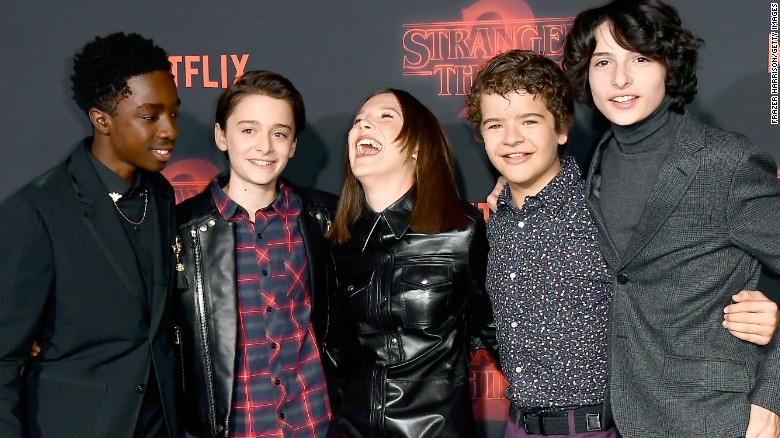
Today's critical rolls: Looking forward to Stranger Things 2? What kind of spooky 80s movies do you like?


Critical Writ has a super-duper strict comment policy that specifies a single rule above all others: we reserve the right to ban you for being a terribad citizen of the internet.

Ghost in the Shell Film Analysis Part III: Setting

We really need to talk about future Japan, because it’s fascinating. The film has several things present from the manga and the anime films, as it is to be expected, but the filmmakers infused the setting with its own originality.


That right there is a cool video showing what I’m talking about. It compares some filming locations in Hong Kong with the film. The work they did is astonishing.

While some people might be annoyed by the fact that no characters other than some Japanese background extras and Chief Aramaki seem to speak actual Japanese on-screen, I’m actually not all that bothered by it. The film establishes a possible reason for this at the outset. When the Hanka Robotics rep that gets brain-hacked and the President of the African Federation are having a business meeting, the Hanka rep plays a recording of a child singing in French. It’s his daughter, and he tells the President of the African Federation that in the time that it took his daughter learn Au claire de la lune (a French folk song), she learned the entirety of the French language. Done.

Clearly the daughter has the latest language implant tech, unlike our adult characters who each speak in their respective languages — nonetheless they can still understand each other. Yes, I know; this is a lazy way of not including too many foreign languages in order to, in a business exec’s mind, not to alienate the US audience and so on, but at least it’s supported by the setting itself. And it’s not an something paraded in front of us, either.

Major Mira Killian has fake memories in her brain, implanted by Dr. Ouelet as ‘motivation’ to fight terrorists with Section 9. You see, the story goes that she came into Japan in a refugee boat that was blown up by a terrorist attack. The damage was so bad that she lost almost all of her body. Leaving aside the fact that this revelation that comes near the climax, while a surprise, it’s already substantiated by the poor garbage truck driver that had fake memories hacked into him by Kuze. It should tell us something about the setting that the Major finds it plausible that she came in a refugee boat.

The Japan in the film is more ethnically diverse than today’s Japan; many ethnicities can be seen in the background. There’s a particular shot that shows this best; what better way to convey the changing face of the film’s Japan than by doing a close up of a Black Buddhist? It plays with the stereotype, even though, in the real world there are Buddhists who are black, it’s not what is usually pictured when we hear the word ‘Buddhism’.

Shot from the Ghost in the Shell live-action film showing ethnically diverse Bhuddists.
I like the symmetry in the shot, too.
Today’s Japan is a nation that’s estimated to be 98,5% ethnically Japanese; it’s a fairly homogeneous country. Clearly, as the film’s cyberpunk world emerged, in typical cyberpunk fashion, other nations buckled under the power of megacorps and destabilized, causing an influx of refugees.

A lot of cyberpunk works would be set inside of one of this megacorp-run nations, or in another sort of dystopia. Something that has always made the Ghost in the Shell franchise unique is that, in contrast to other works, in future Japan the rule of law still pervades hard, as pointed out in the first confrontation between Cutter and Chief Aramaki — Aramaki immediately dismisses the notion that the Prime Minister would take Cutter’s word over his own. Which makes it extra brilliant, in a way, that the live-action adaptation updates future Japan to be more ethnically diverse, because of course refugees would strive to go to the most stable nation possible in times of strife. It’s kind of a subtle nod to the situation we are living in right now in the world.

That’s not to say there aren’t any shady buisness deals or anything. Major Mira Killian and Batou at some point shoot up some sort of yakuza underground club, not to mention the whole of the unethical experiments tied to Project 2571, the one that resulted in the creation of the Major. There’s also a scene where some shady trafficker, when Batou and the Major are on the way to the marketplace, attempts to sell the Major some black-market body parts or something.

Gif from the live-action Ghost in the Shell film showing the major on the way to meeting Lia.
In general the street scenes are amazing.
Look at the background details.
I don’t know where to put this, but the film thinks itself very clever when it turns out that, before the Major, there has been other 98 people that have been experimented on to become full-body cyborgs and weapons useful to the Major. So this makes Major Mira Killian the 99th test subject, a human-machine dream combination, working at Section 9.

I told you future Japan was fascinating.


Rosario is an early-twenties, outspoken woman, who likes to burrow between piles of books, and store miscellaneous trivia in her head.

Remaketober 2017 Week 3: The Last House on the Left


Wes Craven was such a towering figure in the horror genre, it's hard to remember that his ratio of good movies to not good movies was...tenuous at best. Oh he's definitely got some classics in there and a few just straight up good movies, he's also got a lot of stuff I don't think is very good (I hate the Scream franchise. There, I said it, I can't unsay it). But that makes the stuff that is worth defending very, very much worth defending.

1972:


Going to bat for The Last House on the Left is one of those things that makes me feel uncomfortable, because it's a very rough movie to actually watch. I end up defending it in the same spirit as I often end up defending Irreversible or Dogtooth, or maybe some of Cronenberg's more extreme work. It's definitely not for everyone and should come with a laundry list of warnings and caveats, but damned if it doesn't totally grab my attention the entire time I'm watching it.

Of course while Dogtooth or Videodrome are buoyed past their difficult to stomach content by some incredible filmmaking and solid themes, The Last House on the Left is much rawer, the filmmaking much less solid, but in a way that almost works in its favor. Its a punk rock approach to filmmaking, in the vein of Clerks or maybe Evil Dead, with enthusiasm and raw talent making up for a lack of polish.

Speaking of, one of the other things that gives the film a big boost is how relevant it feels to the moment it came out. I'm sure other critics have noticed the similarities in how the film is shot to footage coming out of Vietnam during during the same time, which gives the film a sense of reality that makes the horrifying goings on even more horrifying, especially given the similarities Krug and his gang have to the then-current Manson family.

None of this is to say the film is flawless, its still got some issues (mostly due to an on set learning curve that trips up...well basically everyone but the Coen Brothers). First movies are always a little rawer and shakily put together, but a good director can still take that and make a great movie. The Last House on the Left is a very hard to watch film, but its definitely one with an impact and and style that would be hard to replicate.

2009:


Which is why I suppose the remake didn't even bother to try. There were lots of directions the remake could have gone, from updating the imagery and themes to be more in line with the Iraq war footage of the time to putting it more in line with the then popular (albeit on its last legs) torture porn subgenre, and I half expected the latter going in. But I didn't expect the movie to just sort of...sit there.

To be clear, when remaking a movie whose primary selling points were its shocking content and how incredibly raw and of-the-moment the filmmaking was, you need to add a new selling point. The slick, high cost production value automatically discards the intensity and sense of reality given by the original's style and obviously the content can't be as shocking given that its just a recreation of the existing content (and, if we're being honest, far less extreme than other contemporary horror films like Saw, although given how much I hate Saw and its contemporaries, that's not a complaint).

Instead the movie just recreates the basic outline of the original film with only a vain attempt at a happy ending inserted to make you feel like there's a difference, which is missing the point a fair bit. Maybe if the film had ended Texas Chainsaw style, with the sense that even though some of the victims survived, they're permanently scarred by the experience, but the film can't even manage that much.

I've reviewed a lot of bad remakes for Remaketober, but aside from maybe the shot-for-shot remake of Psycho, this is probably the most pointless remake I've ever covered. Questions of whether it's good or bad don't even enter into it, it just has no reason to exist. If the original film is equivalent to Clerks then the remake is equivalent to Mallrats; the same basic bones of the story but somehow infinitely more soulless and empty inside.


Elessar is a 27 year old Alaskan-born, Connecticut-based, cinephile with an obsession with The Room and a god complex. 

Critical Hits & Misses #306


For today's musical hit, have the ever wonderful Lindsey Stirling and "Brave Enough"


Today's critical rolls: In honor of one of my favorite people on the planet (Lindsey Stirling) wrecking face on Dancing with the Stars this season (rooting for you all the way, Lindsey!), do you enjoy dancing? If so, what's your favorite kind of dance? If you can't/don't dance, what would you learn if you could?

Critical Writ has a super-duper strict comment policy that specifies a single rule above all others: we reserve the right to ban you for being a terribad citizen of the internet.

Critical Hits & Misses #305


For today's musical hit, here: have Camila Cabello performing "Havana" at the Radio 1 Teen Awards


Today's critical rolls: Happy Monday! We're quickly rolling up on the holidays already. What are you looking forward to in the upcoming holidays? (that includes Halloween, y'all)


Critical Writ has a super-duper strict comment policy that specifies a single rule above all others: we reserve the right to ban you for being a terribad citizen of the internet.